

The Numbers Don’t Lie: Affordability Crisis Explained
Let’s dig into the data and see what it really tells us about home affordability. The graph below paints a pretty stark picture, especially for first-time buyers and middle-income families.

Although the graph may appear simple, compiling it required extensive data. By leveraging historical data on mortgage interest rates, median home prices, and the consumer price index (inflation), I calculated the monthly mortgage payments (Principal & Interest) for each month, adjusted to 2024 dollars.
This adjustment ensures that the payments on the far right in 2024 reflect current values, while the payments to the left of 2024 have been adjusted, allowing us to compare home affordability levels over time.
While today’s median home mortgage payment is nearly double what buyers faced in 2020, we have not established a new all-time high as 1981’s record is still far above today.
Though no new record has been reached (thankfully), home affordability today is worse than at any time since the 1980s. Buyers today are facing tough times, so many people assume home prices will come down. Unfortunately, that is not likely.
Median Income Households Can’t Buy Median Priced Homes
When we look at different markets across the country, Zillow data reveals that out of the 50 largest metro areas, only 10 offer homes that are affordable to median-income households with a standard 20% down payment (and what median-income family has the cash to make a 20% down payment?) That’s right, just 10 out of 50. If you’re house hunting in places like San Francisco, Los Angeles, or New York, you’re facing an even tougher battle.
Now, you might be thinking, “Well, what about luxury homes? Surely the high-end market is doing fine.” But here’s the kicker: even luxury properties are feeling the squeeze.
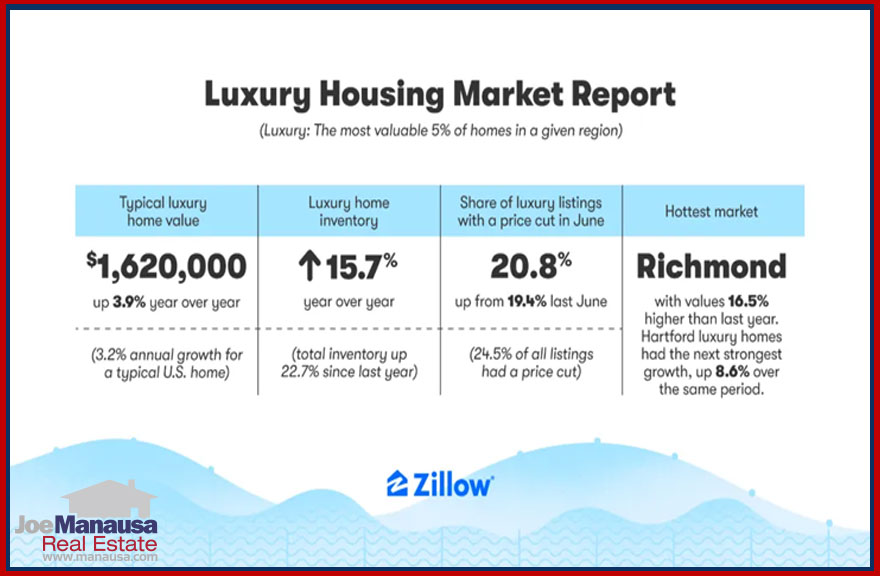
In fact, luxury home values have outpaced typical homes for five consecutive months. We’re seeing luxury home values rise by 3.9% compared to a 3.2% increase for typical homes.
What does this all mean? It’s not just first-time buyers or middle-income families struggling to afford homes. This affordability crisis is spreading across the entire market. It’s affecting everyone from young professionals looking for their first condo to well-off families eyeing that dream home in the suburbs.
Let’s put this into perspective with some real numbers. Zillow reports that the typical home value in the U.S. hit $362,482 in June, a 3.2% increase from last year. Now, 3.2% might not sound like much, but it’s the lowest monthly growth we’ve seen in June since 2011. And remember, this is happening while wages aren’t keeping pace.
Here’s where it gets really concerning. The typical mortgage payment for a median-priced home now consumes 39% of the typical household income. Historically, that number has been around 21%. We’re talking about nearly double the historical average. That’s a massive jump, and it’s putting homeownership out of reach for many people.
And it’s not just me saying this. Lisa Sturtevant, chief economist at Bright MLS, put it bluntly: “Affordability is the main constraint on the housing market.” When experts are using words like “main constraint,” you know we’re dealing with a serious issue.
But here’s something that might surprise you. Despite these affordability challenges, we’re not seeing a flood of homes hit the market. In fact, existing home sales fell by 5.4% in June. Why? Because current homeowners are feeling the pinch too. Many of them are locked into low mortgage rates from a few years ago. They’re looking at today’s higher rates and deciding to stay put rather than sell.
So what we’re left with is a market where both buyers and sellers are feeling stuck. Buyers can’t afford to get in, and many sellers can’t afford to move out. It’s a classic catch-22 situation.
Now, you might be wondering, “Is this just a problem for people buying their first home?” Not at all. Nearly 43% of last year’s home buyers used gifts from family or friends to help with their down payment. This isn’t just affecting young adults striking out on their own. We’re talking about a wide range of buyers, across different age groups and income levels, all struggling with affordability.
Get Our Free Market Update
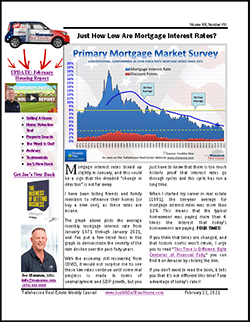
Other buyers, sellers, lenders, and real estate agents have this critical information, and now you can too!
Get immediate access to our most recent newsletter.
Let more than 30 years of experience work for you with charts, graphs, and analysis of the Tallahassee housing market.
Each Monday morning we send out a simple, one-page report that provides a snapshot of the Tallahassee housing market. It only takes 2 minutes to read, but it gives you better market intelligence than most real estate agents possess. Just tell us where to send it below!
Supply and Demand: The Hidden Culprit
Now that we’ve seen the harsh reality of home affordability, let’s dig into what’s really driving this crisis. It’s time to talk about supply and demand – the hidden forces shaping today’s real estate market.

At first glance, the numbers might seem confusing. Total housing inventory is up 21% from last year. That sounds like good news, right? More homes on the market should mean lower prices. But here’s the kicker: we’re still 33% below pre-pandemic levels. And get this – we’re a whopping 74% lower than the peak inventory we saw back in 2012.
So what’s going on here? Why aren’t we seeing more homes hit the market? The answer lies in something called the “lock-in effect.” It’s a fancy term for a simple concept: homeowners are staying put.
Think about it. If you bought a house a few years ago with a 3% mortgage rate, would you want to sell now when rates are double that? Probably not. And you’re not alone. Zillow reports that about two-thirds of outstanding mortgages have rates under 4%. That’s a lot of people with a big incentive to stay right where they are.
While it’s clear that homeowners staying put reduces demand in the market, what’s less apparent is that it also decreases the potential supply of homes for sale. This stagnation creates a direct impact on the supply and demand balance, with each homeowner who doesn’t move contributing to both reduced demand and limited supply.
We must address another issue that has been developing for years: underbuilding. For over a decade, we’ve fallen short of constructing enough homes to meet demand. The consequence? A significant housing shortage—estimated at a minimum of 1.9 million homes according to Zillow, and potentially up to 10 million homes by other estimates.
US Housing Construction Shortage
The graph below presents a simplified comparison between recent construction and past trends, highlighting a significant shortfall—nearly 5 million homes!

These aren’t just numbers on a spreadsheet. They represent millions of families who can’t find a home that fits their needs and budget. There are several million reasons why prices keep climbing, even when the economy gets shaky.
Now, you might be thinking, “Surely this can’t last. We must be due for a crash, right?” Not so fast. Remember 2008? This isn’t that. Back then, we had a glut of homes after the government took away programs for lower-credit buyers. Today, we have the opposite problem – not enough homes and homeowners with solid equity.
Rick Sharga, a market intelligence expert, puts it bluntly: “The record low supply of houses on the market protects against a market crash.” In other words, as long as demand outstrips supply, prices aren’t likely to take a nosedive.
Now, this is usually the moment in the article where someone in the comments calls me a shill, claiming I’m just here to tell everyone to “buy, buy, buy.” Take Carly, for example, who dropped a gem in my last video: “This guy doesn’t know what he’s talking about. Don’t buy a house.” Alright, Carly, let’s dive into that, not just for this article, but for any future ones where I’m breaking down housing market statistics from verified data.
Unless you’re comfortably settled in your parents’ basement, you’re going to have to make some kind of housing decision. Doing nothing is, in itself, a decision. If you’ve got a low-interest mortgage, I totally get why you’d want to stay put. But let’s focus on everyone else—especially those who are relocating, for whatever reason. They’ve got three options: buy, rent, or, well, be homeless. So Carly, if your situation is “basement sweet basement,” I can see why “don’t buy a house” might sound appealing—free is hard to beat. But let’s consider the folks who are actually needing a place to live.
If you choose to rent, you’re looking at skyrocketing rents, thanks to—you guessed it—low inventory. If you choose to buy, prices are soaring for the same reason. And if you choose to be homeless, well, God bless you. I wish you the best.
Rent Or Buy?

So what does all this mean for you? Whether you’re renting, buying, or selling, understanding these supply and demand dynamics is crucial. For renters and buyers, it means being prepared for a competitive market. You might need to be more flexible in your search, consider up-and-coming areas, or look into down payment assistance programs.
For sellers, it’s a double-edged sword. Yes, you could get a great price for your home. But unless you’re downsizing or moving to a much cheaper area, you’ll face the same tight market when you buy your next place.
The key takeaway here? Don’t expect a quick fix to the affordability crisis. The factors driving it – the lock-in effect, years of underbuilding, and persistent demand – aren’t going away overnight. But by understanding these forces, you can make smarter decisions in your real estate journey.





Housing Crash or Boom? Here’s What’s Coming in 2025

BIGGEST Housing Market Myth EXPOSED by New Foreclosure Data
Navigating the Market: What This Means for You
Alright, now that we’ve uncovered the forces driving the housing market, let’s get practical. What does all this mean for you, whether you’re looking to buy or sell?
First, let’s talk about a surprising trend. Nearly 25% of home listings saw price cuts in June.

That’s the highest rate for this time of year since 2018. But don’t get too excited – a cut in asking price doesn’t necessarily mean home values are declining. It’s more about sellers adjusting to market realities.
Speaking of market realities, Zillow’s forecast might raise some eyebrows. They’re predicting home values to rise only 1% nationally through June 2025. That’s a far cry from the double-digit increases we’ve seen in recent years. So what does this mean for you?
If you’re a buyer, this could be good news. The market might be cooling off a bit, giving you more breathing room. But don’t expect prices to drop dramatically. Remember that supply and demand issue we talked about? It’s still very much in play.
So, what’s your game plan if you’re house hunting? First, focus on your budget. With affordability being such a big issue, it’s crucial to know exactly what you can afford. Don’t just look at the sticker price – factor in things like property taxes, insurance, and potential maintenance costs.
Next, be flexible with your home search. With inventory still tight, you might need to compromise on location or features. Consider up-and-coming neighborhoods or homes that need a little TLC. Sometimes, the perfect home is the one you make perfect.
Here’s a strategy many buyers overlook: down payment assistance programs. These can be a game-changer, especially for first-time buyers. They can significantly lower the barrier to entry for homeownership. Do your research – you might be surprised at what’s available in your area.
Now, if you’re on the selling side, you’re probably wondering how to navigate this changing market. The good news is that well-priced homes are still selling relatively quickly. But here’s the catch – competition is increasing, and buyers have more power than they did a year ago.
What does this mean for your pricing strategy? You need to be realistic. The days of slapping any old price on a house and watching a bidding war break out are over. Work with your agent to price your home competitively from the start. If you aim too high, you might end up chasing the market down with price cuts.
Speaking of agents, choosing the right one is more important than ever. Look for someone who understands these market dynamics and can guide you through them. They should be able to explain things like supply and demand, your home valuation, factors impacting you in the market today, and how your home compares to recent sales in the area.
Here’s a pro tip for sellers: focus on profitable improvements and touch-ups on your home. Too many sellers are told to practically rebuild their homes, but you want to focus on maintenance and improvements that will return you more money than you spend.
Remember, whether you’re buying or selling, knowledge is power. Stay informed about market trends in your specific area. National averages are helpful, but real estate is ultimately local. What’s happening in San Francisco might be very different from what’s going on in Atlanta.
Finally, don’t let the headlines scare you. Yes, there are challenges in the housing market right now. But there are also opportunities. By understanding the market dynamics and being strategic in your approach, you can still achieve your real estate goals.




Fannie Mae Report: It's The TRUTH About The Housing Market

Real Estate Meltdown: Starter Homes at $1M in 233 Cities

Is the Housing Market Crashing? | Redfin April 2025 Update

Is This The CALM Before The CRASH? Volatility Rocks Housing

Warning Signs For Home Buyers And Sellers



How To Sell Your House On Your Own

10 PROVEN Strategies To Increase A Home's Selling Profit
2025s HOTTEST Home Selling Strategies You Need NOW
The 3-DAY Method To Sell Your Home For More (2025)

The Best Time To Lower The Price In A Home Sale

How FOMO Makes Your Home Sale More Profitable