
Definition and Explanation of the Lock-In Effect
The lock-in effect describes a situation where homeowners feel stuck in their current homes due to financial disincentives caused by rising mortgage interest rates. This happens when the cost of refinancing or buying a new home becomes prohibitively high compared to their existing mortgage terms.
Homeowners who secured mortgages at lower interest rates are hesitant to move because new mortgage rates are significantly higher. The increased monthly payments associated with these higher rates deter them from selling their current homes and purchasing new ones.
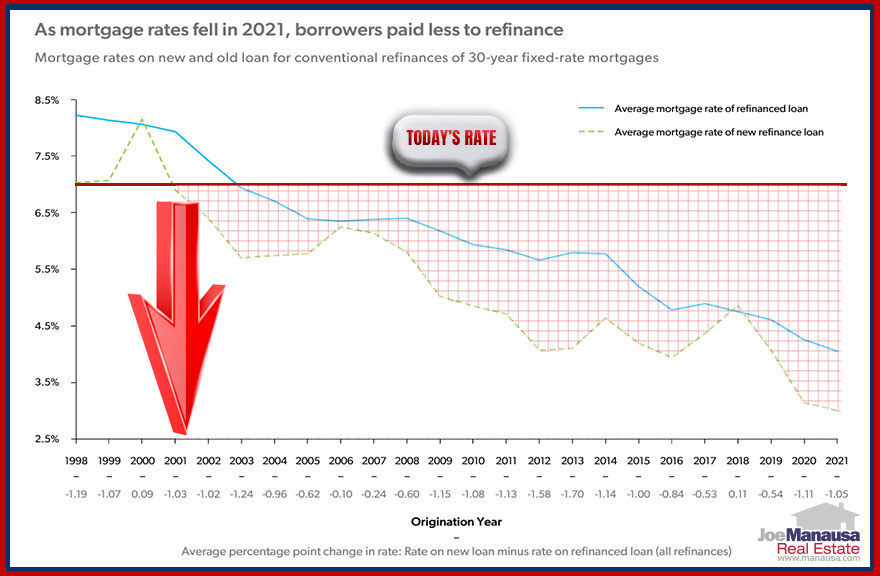
The graph from 2001 to the present highlights the disparity between the interest rates homeowners locked in and today’s rates. Anyone who refinanced or purchased a home during this period is now impacted by the lock-in effect.
Homeowners often feel financially secure with their low-interest mortgages, making them reluctant to disrupt their stable situation. The fear of higher future costs and financial uncertainty can prevent them from making significant financial changes, reinforcing the lock-in effect. This reduced mobility results in lower housing market inventory and fewer homes available for sale. Consequently, the housing market stagnates, with fewer transactions and diminished dynamism.
The broader economic consequences are significant. Reduced housing mobility affects job markets, as people are less willing or able to relocate for new employment opportunities. It also slows down the housing market, a critical driver of economic activity, impacting the overall economy.
Understanding the lock-in effect helps us appreciate homeowners’ challenges in an elevated interest rate environment and allows us to explore potential solutions to mitigate these challenges.
Impact on Homeowners with Low-Interest Mortgages
Elevated mortgage interest rates significantly impact homeowners who previously secured mortgages at lower rates. These homeowners now face a dilemma: stay put with their advantageous low rates or move and encounter substantially higher borrowing costs. Let’s delve into three specific case studies:
1. The Move-Up Buyer
Ava and Noah, both young professionals, work hard to thrive in their careers. They’ve been living in their first home, a two-bedroom townhouse in an area popular with single, young professionals.
Now, feeling they’ve outgrown this lifestyle, they want to buy a three-bedroom home in a nearby subdivision, still convenient to their workplaces. Both valued employees at their companies, Ava and Noah have received fair pay raises over the past three years and feel ready to move upward.
However, when they discuss their plans with their real estate agent, they realize that moving will require significant sacrifices. Let’s look at the numbers:

In 2018, Ava and Noah purchased a charming townhome and refinanced it in 2021 when rates dropped below 3%. Thanks to a strong appreciation of around 9% annually over the past four years, they now have significant equity to use as a down payment for their next home.
However, their desired new home has also appreciated significantly. With today’s mortgage rate more than double their existing rate, moving would mean increasing their monthly housing cost from $741 to $3,010. This represents a staggering 306% rise in housing expenses simply because they want a larger house with a bigger yard.
Now, Ava and Noah find themselves at a crossroads. They can barely afford the increased payment and understand that they would build equity faster, but the sharp rise in monthly costs is daunting. This dilemma exemplifies why many move-up buyers in America are hesitant and uncertain about what to do next.

The Best Time To Lower The Price In A Home Sale
Want to Sell Your Home Quickly and Profitably? Watch This Now
Time-Lapse Tree Removal!

What Does A Realtor Earn?

How To Sell Your House When You Are In A Hurry

Do's And Don'ts During The Home Loan Process

7 Tips On Buying A Home With A Pool
How much house can you actually afford (By Income)?

What Sellers Need To Know About Robo-Offers In Real Estate
2 – The Downsizer
Pat and John, recent retirees, have decided to sell the home they’ve owned for the past eleven years. With just the two of them now, their house feels too large, and neither wants to handle the yard work anymore.
Still keen on homeownership, they aim to downsize to a modern home in a zero-lot-line community, where homes have been built within the last five years. Let’s take a closer look at the numbers:

When they discovered their payment would increase despite downsizing, John was stunned. “We’re getting half the house on a quarter of the lot, and my payment will nearly double?” he exclaimed.
The inflated cost of new construction and soaring land prices, exacerbated by poor community growth plans, make Pat and John’s move costly. Even after using all their home equity, the combination of today’s higher mortgage interest rates and soaring home prices requires them to increase their housing budget by 38%.
Get Our Free Market Update
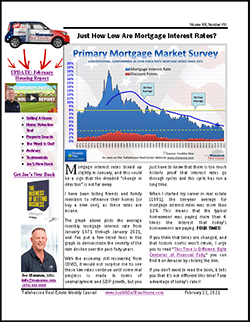
Other buyers, sellers, lenders, and real estate agents have this critical information, and now you can too!
Get immediate access to our most recent newsletter.
Let more than 30 years of experience work for you with charts, graphs, and analysis of the Tallahassee housing market.
Each Monday morning we send out a simple, one-page report that provides a snapshot of the Tallahassee housing market. It only takes 2 minutes to read, but it gives you better market intelligence than most real estate agents possess. Just tell us where to send it below!
3 – Non-Discretionary Buyer
Mark and Lisa are a typical millennial couple with one young child. Recently, Lisa learned that she must relocate to keep her job at a PR firm. Fortunately, Mark’s job is flexible enough to accommodate the move without major disruptions, so the family is preparing to relocate 1,000 miles away.
Unlike homeowners looking to upgrade or downsize, Mark and Lisa are non-discretionary buyers who must move. They face a choice: rent or buy, but sitting this one out isn’t an option.
They bought their home in 2021, and its value has appreciated nicely. However, they know they’ll need to spend a similar amount in their new city. Here’s what their numbers look like:

Mark and Lisa were initially excited about the next chapter of their lives. Moving to a new city felt like an adventure, especially since they had heard the cost of living was comparable to their current location.
However, after crunching the numbers, Lisa was devastated. “This isn’t fair,” she cried. “I’m moving to a new town without getting a raise, but our housing costs are going to rise by 76%!”
Suddenly, Mark and Lisa felt trapped. Staying meant Lisa needed to find a new job and hope her earnings would sufficiently cover their expenses. Moving meant barely scraping by with the added housing costs. Faced with these tough choices, the excitement of their new adventure quickly faded into uncertainty and stress.






Housing Crash or Boom? Here’s What’s Coming in 2025