 In an ever-evolving housing market, understanding the intricate balance between supply and demand is crucial for anyone looking to navigate the complexities of buying, selling, or investing in real estate. With fluctuating inventory levels and shifting economic indicators, the need for precise and current data has never been more critical.
This article delves into the latest trends and analyses, leveraging Zillow’s comprehensive database to offer a detailed snapshot of the current state of the U.S. housing market. From examining the historical context of home availability to interpreting the implications of rental rate adjustments, we provide insights essential for making informed decisions in today’s real estate landscape.






Housing Crash or Boom? Here’s What’s Coming in 2025

BIGGEST Housing Market Myth EXPOSED by New Foreclosure Data
Supply Of Homes For Sale Is Rising
To accurately assess the health of the housing market, you must first examine the supply and demand relationship. Therefore, our initial graph presents the supply levels since 2019.
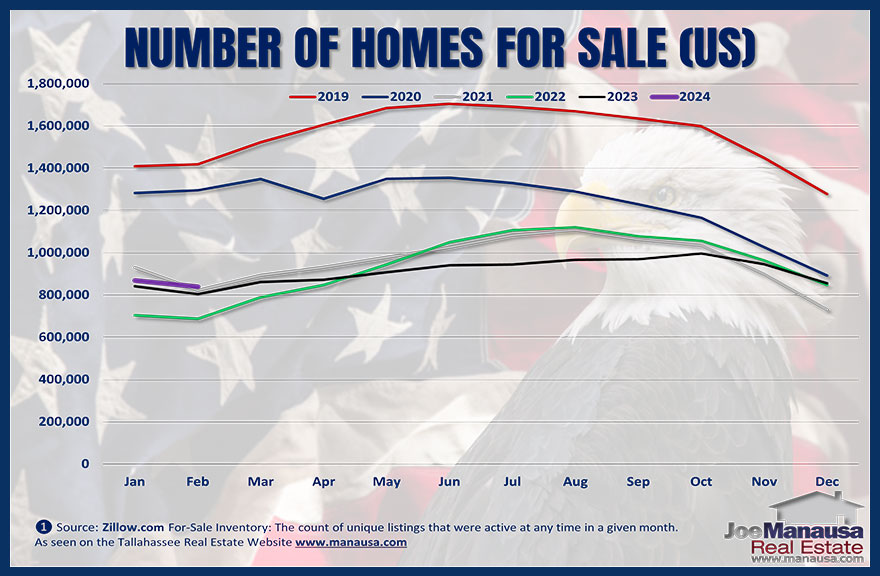
We color-coordinated each year on the graph, showing that 2024 (represented in purple) offers roughly the same number of homes for sale as 2021. This marks a slight improvement over the past two years, yet it remains significantly below the necessary levels. It’s important to note that the red line (2019) indicates the highest inventory levels across all six years, even when 2019 experienced an undersupplied market!
Keep Up With New Trends In Tallahassee!
Get The Tallahassee Real Estate Newsletter
 Don't be the one that doesn't know what's going on when you sell a home or buy a home in Tallahassee.
Other buyers, sellers, lenders, and real estate agents have this critical information, and now you can too!
Get immediate access to our most recent newsletter.
Let more than 30 years of experience work for you with charts, graphs, and analysis of the Tallahassee housing market.
Demand Has Fallen For 26 Straight Months
This graph displays the monthly number of homes sold (blue lines) alongside the year-over-year change percentage (yellow bars on the right axis).
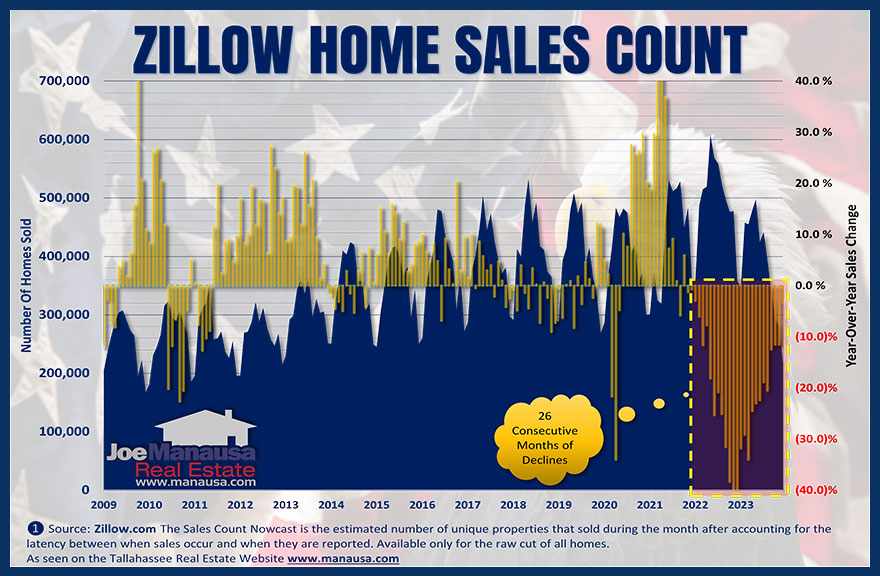
Since December 2021, the monthly sales of homes have been on a decline, driven by mortgage interest rates more than doubling and inventory levels dropping to a record low.
Many YouTubers predicted that this falling demand would lead to a crash in home prices. However, they overlooked a crucial aspect of the housing market: Homebuilders are not constructing homes at their usual rates, meaning the bulk of the inventory comes from homeowners. These individuals contribute one unit of supply when they sell and then create one unit of demand when they purchase.
The lack of available options and the increased cost of borrowing have pushed many sellers out of the market. Consequently, the reduced demand from these potential sellers has been offset by the simultaneous decrease in supply.



Fannie Mae Report: It's The TRUTH About The Housing Market

Real Estate Meltdown: Starter Homes at $1M in 233 Cities

Is the Housing Market Crashing? | Redfin April 2025 Update

Is This The CALM Before The CRASH? Volatility Rocks Housing

Warning Signs For Home Buyers And Sellers
Still A Strong Sellers’ Market
By merging the supply data with the demand data, we can calculate the available months of supply. Historically, a six-month supply was viewed as balanced, indicating a state of market equilibrium. However, I now think market equilibrium is achieved with a supply of closer to four months (see why here).
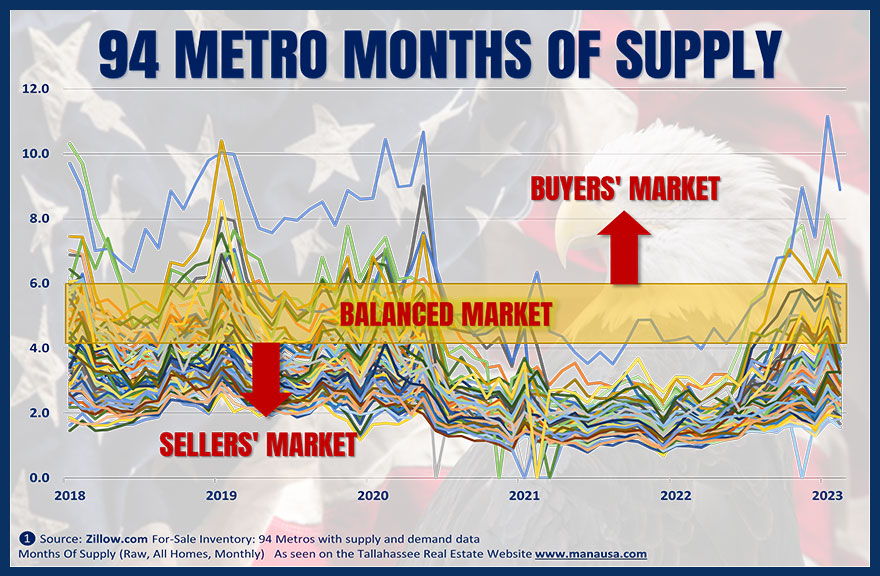
This graph shows the inventory months of supply in the largest U.S. metropolitan areas, underscoring the persistent strength of a sellers’ market.
A gold band spans the graph horizontally, offering a broad estimate of market equilibrium. For those adhering to the traditional six-month supply standard, only three major metropolitan areas have shifted towards a buyers’ market.
If you consider a four-month supply as balanced, then only ten Metropolitan Statistical Areas have moved in favor of buyers. Regardless of the chosen benchmark, over 90% of Americans reside in areas dominated by a sellers’ market.
Even with falling demand, the lack of new inventory means the market dynamics for home sellers remain unchanged. Sellers adopting an aggressive, omnichannel pre-marketing approach continue to attract strong interest and achieve high returns from buyers.



How To Sell Your House On Your Own

10 PROVEN Strategies To Increase A Home's Selling Profit
2025s HOTTEST Home Selling Strategies You Need NOW

The 3-DAY Method To Sell Your Home For More (2025)

The Best Time To Lower The Price In A Home Sale

How FOMO Makes Your Home Sale More Profitable

Home Sale Sabotage: Top 10 Mistakes Sellers Make
The Zillow Crystal Ball Says …
Zillow is bullish on home prices over the next twelve months.
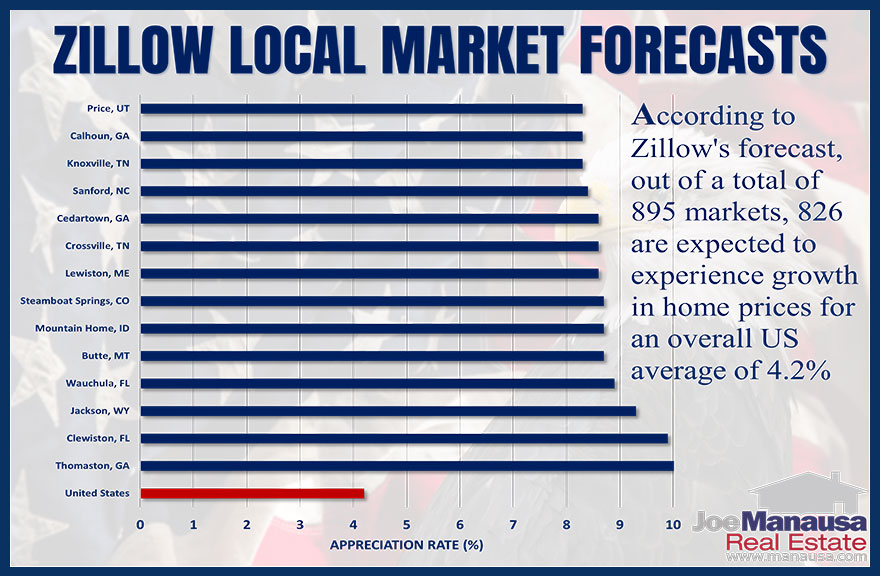
This graph ranks the top 14 metropolitan areas based on Zillow’s projected home price appreciation. Thomaston, GA, leads the pack with Zillow predicting a 10.2% increase in home prices by the end of January 2025. Zillow anticipates a 4.2% rise in US home prices overall, with only 7.7% of all Metropolitan Statistical Areas expected to see declines.
Regardless of your opinion on Zillow, it’s undeniable that their extensive and rapidly updated database offers valuable market insights and data, which has significantly aided my understanding of home sales in the US.

Buy Now Or Wait? The 91.6% Rule
Biased Results? The New York Times Rent Or Buy Calculator

Do's And Don'ts During The Home Loan Process

6 Real Estate Contract Terms You Should Not Overlook

7 Tips On Buying A Home With A Pool

How much house can you actually afford (By Income)?

What Does "Marry The House Date The Rate" Mean In Real Estate?

Why Fixer Uppers Are the New Gold | Home Renovation Guide

8 Tips For Buying An Affordable Florida Vacation Home
What Stabilizing Rents Mean In The For Sale Market
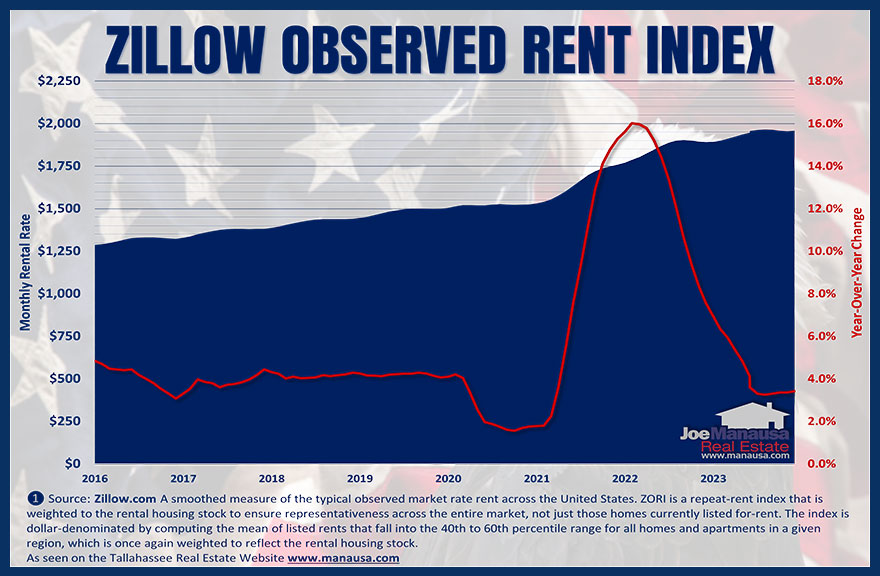
Our last graph in today’s analysis showcases the Zillow Observed Rent Index, calculated by averaging the listed rents in the 40th to 60th percentile range for all homes and apartments. We monitor rents to gain an edge in forecasting future changes in home prices.
We monitor rental rates to gauge housing demand, affordability, and investment potential. Rising rental rates can indicate a strong market, pushing renters towards buying and attracting investors. This data helps us understand market dynamics, economic health, and the rent-buy decision process.
By analyzing rental trends, we can predict shifts in the housing market, advising clients effectively on buying, selling, or investing in single-family homes. Essentially, rental rates offer insights into the broader housing ecosystem, influencing demand for single-family homes and guiding strategic decisions in the real estate market.
Since the pandemic’s start, rental prices have jumped 29.4%, with an average annual increase of 7% over the past four years. Remarkably, nearly two-thirds of this surge occurred in 2021 alone. This dramatic increase was tempered by a boom in apartment construction and a slowdown in economic growth.
As of now, rents have risen 3.4% from last year, reaching $1,958, as reported by the Zillow Observed Rent Index (ZORI). This rate of annual growth is slightly below the pre-pandemic average of about 4.1% seen in 2018 and 2019. In 47 of the 50 largest metro areas, rents have increased from the levels seen a year ago.
The Best Time To Lower The Price In A Home Sale
Want to Sell Your Home Quickly and Profitably? Watch This Now
Time-Lapse Tree Removal!

What Does A Realtor Earn?

How To Sell Your House When You Are In A Hurry
Do's And Don'ts During The Home Loan Process
7 Tips On Buying A Home With A Pool
How much house can you actually afford (By Income)?

What Sellers Need To Know About Robo-Offers In Real Estate

How To Get 20% Or More With Leveraged Real Estate
8 Tips For Buying An Affordable Florida Vacation Home
Should you sell your home or rent it out?

Is turning your college student into a homeowner a wise investment or a financial faux pas?

6 Real Estate Investing Lessons from the 2008 Housing Bubble

How To Avoid Common Legal Issues When Buying Or Selling A Home

Should You Buy A House For Your Child?

How To Use Price Per Square Foot When Valuing A Home