Buying a house is more than just picking the right place—it’s about nailing the details that can make or break your experience. Sure, we all know about checking for a sturdy roof or a working cooling system, but what about the nitty-gritty legal stuff?
You know, those ‘Force Majeure’ clauses that could throw your plans out the window or the sneaky bits like prorations and special assessments. This video is about those six crucial but easy-to-miss parts of real estate contracts that can burn you if you’re unaware.
And you know what? Sometimes, even top-notch real estate agents might miss pointing out these things (and lower-notch agents). It’s not always obvious at first why they’re important. But trust me, you don’t want to learn the hard way that these details matter. So, let’s dive in and uncover these hidden gems together. It’s all about staying one step ahead and ensuring your dream home doesn’t become a legal headache after you get the keys.
What the heck is “Force Majeure?”
“Force Majeure” in real estate contracts refers to extraordinary events or circumstances beyond the control of the parties involved, such as natural disasters (like earthquakes or hurricanes), war, strikes, or acts of government. These events are considered unforeseeable and unavoidable. When a Force Majeure clause is included in a real estate contract, it typically excuses one or both parties from fulfilling their contractual obligations when such events occur.
For instance, if a major storm drops a tree on a home the day before closing, it will impact the terms of the contract. The Force Majeure clause might allow the seller to extend the deadline without facing penalties or delay so that the house can be returned to its pre-storm condition. The specific applications and consequences of a Force Majeure event can vary based on the wording of the contract and the legal context in which it is interpreted.
A Force Majeure clause can provide critical relief in unexpected and uncontrollable situations, but its impact depends heavily on the specific circumstances, the contractual language, and the applicable legal standards.
If you have never worked with a real estate agent who understands the contract inside and out, you’ll certainly understand their value if you find yourself dealing with a force majeure scenario. You definitely don’t want to learn this lesson when moving during hurricane season in Florida!
“Closing” Doesn’t Necessarily Mean “Possession”
In a real estate contract, the terms “closing” and “possession” refer to two distinct but related aspects of the property transfer process:
Closing: This is the final step in a real estate sale where the buyer officially becomes the property’s owner. It involves signing documents, paying the purchase price, and handling fees. Once paperwork is finalized and payments made, the sale is complete.
Possession: This is when the buyer gets to move into the property. It typically occurs immediately after closing, but the contract might specify a different time (or perhaps, a condition could establish this date that surprises the buyer). The exact terms of possession depend on the agreement between the buyer and seller.
The specific terms regarding closing and possession are crucial in a real estate contract and can vary greatly depending on the agreement between the buyer and seller. The contract should clearly define these terms to avoid any misunderstandings or disputes. Make sure your real estate agent briefs you on closing and possession before you sign an offer or contract; you’ll need to know when you must be in or out of the home.
Let me share a story that vividly illustrates why it’s crucial to understand that certain terms in real estate are not interchangeable and should be taken seriously. Picture this: we were representing a buyer, thrilled to be on the cusp of owning their dream home. As part of the process, and with the closing date just a week away, we conducted a final inspection of the property, following the completion of agreed-upon repairs. What we encountered was unexpected—the current homeowner appeared to have made no preparations whatsoever for their impending move.
Curious and a bit concerned, our agent inquired about the seller’s moving plans. The seller casually mentioned they were moving to a new location, but their move was scheduled for a few days after our planned closing date. The conversation took a turn when our agent asked where they intended to store their furniture until then. It became painfully clear that the seller was under the impression they didn’t need to vacate the property on the closing day. This misunderstanding stemmed from a failure in communication by the seller’s agent, who hadn’t clarified the contract terms.
This oversight led to the seller having to scramble at the last minute, incurring additional costs for a rushed move. Imagine the legal problems the seller might have encountered had our agent not saved the day. This scenario underscores a lesson we always emphasize: If you are of the mindset that your agent selection is not important, it will only take one bad move to change your mind!
We reveal the secrets of leveraging FOMO (Fear of Missing Out) to create a competitive environment among buyers, driving up offers and making your home...
The top 10 mistakes sellers make usually stem from ignorance. Once these concepts are explained, most sellers take corrective action and strengthen their position.
Prorations – Who Pays What?
In a real estate contract, “prorations” refer to the process of dividing ongoing expenses related to the property between the buyer and seller, based on the period each party is in possession of the property. These expenses can include property taxes, utility bills, homeowners association fees, insurance premiums, and other local expenses.
The purpose of prorations is to ensure that each party pays only for the expenses incurred during the time they actually own the property. For example, if a seller has paid property taxes for the entire year but sells the property on the final day of November, the buyer would be responsible for a prorated share of those taxes, covering the month of December when they will own the property.
The exact details of how prorations are calculated and handled are typically specified in the real estate contract and are often settled at closing. This ensures a fair distribution of costs and prevents either party from paying more than their share of expenses for the time they own the property unless, of course, something is overlooked by either party.
The typical problems that arise from prorations is that one or both parties might not have been told what they mean. For example, a homeowner selling a house at the mid-year point will have to pay prorated property taxes to the buyer. Anybody who has paid property taxes knows the amount is not peanuts, so sellers giving up 6 months of property taxes (unexpectedly) could find themselves in a bind coming up with their downpayment on the next home.
A Special Surprise For The Buyer
A special assessment lien in real estate refers to a charge imposed on a property for public improvements that enhance the value of the property, such as road construction or neighborhood beautification. It’s crucial for both buyers and sellers to understand special assessments before executing a real estate contract.
These liens are distinct from regular taxes as they are attached to the property itself, not the owner. This means the lien remains with the property if the property is sold. Special assessments can be paid in full or in installments, depending on the terms set by the authority imposing the assessment.
A common example is when a neighborhood transitions from individual septic systems to a public sewer system. The local authority charges each home a special assessment for the sewer connection, often spread over time to ease the financial burden. The situation gets interesting when a property is sold during the term of a special assessment repayment, as the buyer must take over the payments.
Sellers are required to disclose any existing liens to potential buyers, as failure to do so can lead to legal issues. Buyers, on their part, should investigate any liens on a property before purchasing, as these can impact the property’s value and attractiveness. The sales contract should clearly outline what liens exist and who is responsible for paying these liens – the buyer or the seller.
You don’t want to be a buyer finding out after closing that you’re monthly payment is higher than you were briefed because an existing special assessment lien exists on the property. And you don’t want to be the seller in this situation either, as you could be sued and end up having to reimburse the buyer, or worse!
Understanding special assessment liens is crucial as they can significantly affect the costs of buying or selling property, and misunderstandings can complicate the transaction process.
Keep Up With New Trends In Tallahassee!
Get The Tallahassee Real Estate Newsletter
Don't be the one that doesn't know what's going on when you sell a home or buy a home in Tallahassee.
Other buyers, sellers, lenders, and real estate agents have this critical information, and now you can too!
Get immediate access to our most recent newsletter.
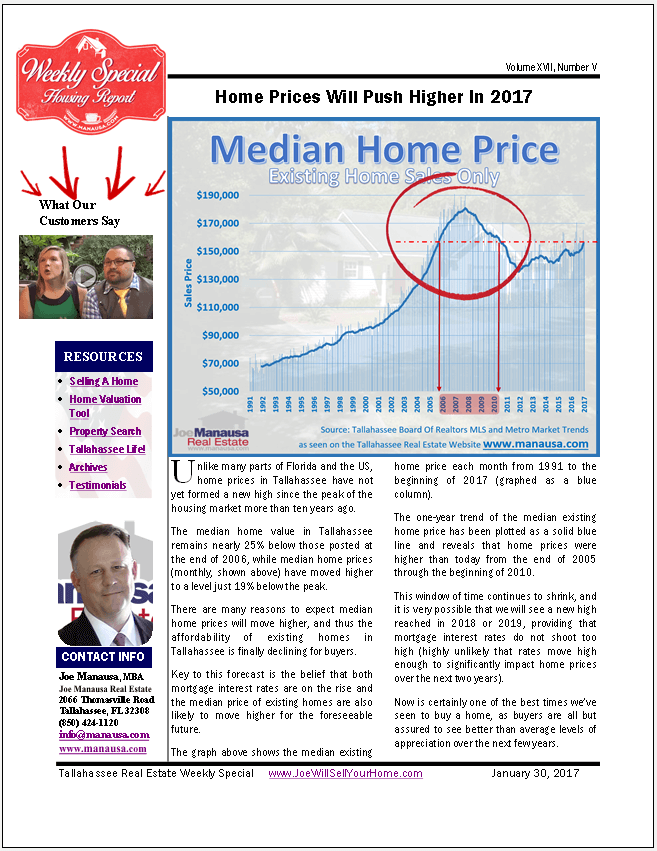
Let more than 30 years of experience work for you with charts, graphs, and analysis of the Tallahassee housing market.
Do You Hold All The Rights To The Home You Just Purchased?
Here’s something buyers often don’t realize – there might be a lease you don’t know about, whether written down or just verbally agreed upon.
The contract should specifically ask about any existing leases. This is super crucial because as a buyer, you might not be aware of a tenant secretly renting the place. The contract language should be clear – it needs to find out about any leases, oral or written.
Why is this important? Well, if you buy a house and surprise – there’s a tenant living there! You’re now the landlord, whether you planned to be or not. The existing lease doesn’t just vanish because the house is sold. You’re stuck with it until it ends. Can you imagine planning on moving into your new home only to discover somebody else (through a lease) has all the rights to use the property for another six months or even six years?
Your purchase agreement should include language addressing an “estoppel letter or estoppel certificate.” This is a tenant’s confirmation of their lease details. Getting the seller to sign one of these estoppel letters is a great idea, even if you don’t think there are any leases on the property. Think of this letter as a safety net – it protects you from any surprises about leases that might pop up after you close on the home. At a bare minimum, you need something in writing from the seller (or their agent) that tells you no leases exist on the property.
In a twist of fate that underscores the importance of clear communication in real estate, we once found ourselves in the middle of an almost disastrous mix-up. We were assisting a buyer in purchasing a home that was listed by a property management company. Unbeknownst to some within that organization, the home was up for sale and not available for rent. This oversight nearly led to a fiasco when, by sheer luck, our buyer’s agent noticed a rental agent from the same property management company showing the home to a potential tenant, poised to sign a one-year lease.
Curious and concerned, our agent inquired about the rental agent’s intentions. The explanation was as shocking as it was unexpected: the rental agent was under the impression the house was available for lease and had a tenant ready to commit to a year, completely unaware of the sale process underway.
Thanks to this fortuitous timing, we managed to avert what could have been a legal nightmare. Had the lease been signed, the ensuing entanglements involving the seller, the buyer, the unwitting tenant, and our real estate company could have been extensive and messy. This incident served as a vivid reminder of the critical need for effective communication and coordination within real estate operations.
For homes that are being sold with valid leases, the contract should include details on the lease period, security deposits, and how the rent gets split at closing. This ensures you’re not losing out on money that is rightfully yours.
You Can’t Do That Here!
In a residential real estate contract, you should address Homeowners Associations (HOAs) and restrictive covenants. HOAs enforce rules, often outlined in restrictive covenants, that regulate various aspects of property use. These covenants cover aesthetics like home colors and restrictions such as renting out your home or operating a business from it.
Restrictive covenants may also limit the types of pets you can have and specify maintenance requirements. It’s crucial to review these covenants before purchasing. They are legally binding, and violations can result in fines or legal actions. Can you imagine discovering (after moving in) that your neighborhood does not allow dogs (like the one you own)? The law requires you to discover this before buying the home!
These covenants may appear too restrictive, but they serve important purposes. They help maintain property values, ensure community uniformity, and prevent resident conflicts. HOAs play a pivotal role in planned communities and condo complexes. They establish and enforce rules, often documented in restrictive covenants, to maintain the community’s integrity and functionality. Violating these covenants can result in penalties or legal actions, making compliance essential.
While some may find these restrictions limiting, knowing them before committing to buy and being regulated by them is important. Understanding and adhering to HOA restrictive covenants is paramount when entering a residential real estate contract, so pay close attention to see what you’re signing up for!
It's possible to find an affordable Florida vacation home, but you have to be prepared. Follow these 8 smart tips so that you can own...
The Devil Is In The Details
Paying attention to these often-overlooked details in your real estate contract can save you from future headaches and unexpected problems. Remember, knowledge is power, especially if you have not selected your real estate agent carefully.
So, take charge, ask questions, and don’t hesitate to seek professional advice if you’re unsure about anything. Before signing on the dotted line, ensure you’re fully informed and comfortable with every aspect of your agreement. And now, it’s your turn to take the next step:
If you are getting ready to move, contact us at the link below the video. Let us know where you’re moving to and from, and we’ll help you choose the best agent to care for your needs. Empower yourself with the right agent, one who is an expert in real estate contracts, and confidently move forward in your property journey!
There are a lot of people who endorse Joe for the job of selling your home, including Preston Scott (host of Tallahassee's top daily "Audio Magazine," as well as the thousands of happy customers Joe has helped in the past. Listen why!

 Buying a house is more than just picking the right place—it’s about nailing the details that can make or break your experience. Sure, we all know about checking for a sturdy roof or a working cooling system, but what about the nitty-gritty legal stuff?



 Don't be the one that doesn't know what's going on when you sell a home or buy a home in Tallahassee.