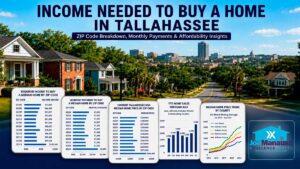
The Mortgage Rate Rollercoaster
Mortgage rates have been highly volatile lately, creating uncertainty for buyers and sellers in the housing market. Let’s look at the recent trends. In September, mortgage rates dropped to a two-year low of 6.08%, significantly impacting home affordability. For a typical buyer who could afford the mortgage payment on an average home in May, this rate drop increased their buying power by $40,000.

However, the market quickly shifted. After a strong jobs report in early October, mortgage rates spiked up again. For buyers who hesitated, their monthly mortgage payment for a typical home with a 20% down payment increased by $175. These rapid changes have made it challenging for buyers to plan their budgets and for sellers to gauge the pool of potential buyers.
The impact on buyers is substantial. One month, they might stretch to afford their dream home; the next, they could find themselves priced out of the market entirely. Sellers are also affected, as the number of potential buyers fluctuates with each rate change. When rates drop, more buyers enter the market, potentially driving up competition and prices. But when rates spike, some buyers may back out, leading to fewer offers or longer time on the market.
Despite the October spike, buyers who could afford the mortgage payment on a typical home in May have seen a significant increase in their buying power over just four months. However, it’s crucial to remember that this assumes home prices remain constant, which isn’t always the case in real market conditions.
The volatility in mortgage rates is primarily due to stronger-than-expected economic data and anticipation of potential economic policies. The Federal Reserve’s ongoing adjustments based on incoming economic information suggest we may continue to see fluctuations in the coming months.
Interestingly, not all markets react similarly to these mortgage rate changes. Some areas are experiencing increased activity, while others are seeing a slowdown, adding another layer of complexity to the current real estate landscape.
Keep Up With New Trends In Tallahassee!
Get The Tallahassee Real Estate Newsletter
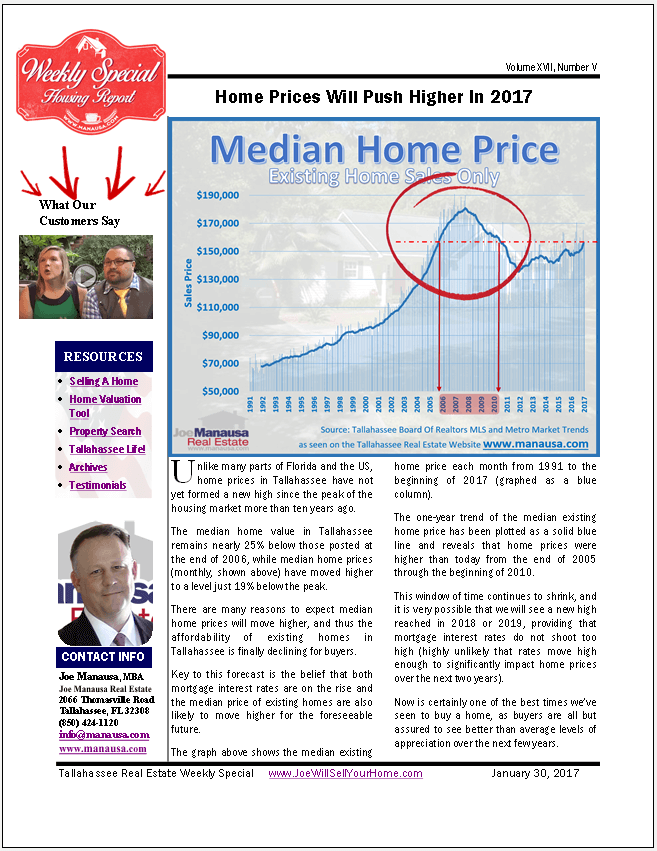 Don't be the one that doesn't know what's going on when you sell a home or buy a home in Tallahassee.
Other buyers, sellers, lenders, and real estate agents have this critical information, and now you can too!
Get immediate access to our most recent newsletter.
Let more than 30 years of experience work for you with charts, graphs, and analysis of the Tallahassee housing market.
The Typical US Home Value
$360,999. That’s the typical U.S. home value according to Zillow’s latest data. But this number can be wildly different depending on where you live. Let’s look at what’s going on across the country.

If you’re considering buying a home with a 20% down payment, you’re looking at a typical monthly mortgage payment of $1,760. This payment is down 7.5% from last year but still up 97.3% since before the pandemic. That’s a huge jump in just a few years.
Things get interesting when we zoom in on different parts of the country. Of the 50 largest metro areas in the U.S., 43 have seen home values increase compared to last year. San Jose leads the pack with a 7.8% increase, followed by Hartford at 7.6%, New York at 7.1%, Providence at 7%, and Buffalo at 5.9%.
But it’s not all growth everywhere. Seven major metro areas have seen home values drop. New Orleans and Austin are down 4%, San Antonio is down 2.7%, and Birmingham and Tampa show slight decreases at 0.7% and 0.5%, respectively.
This data shows us that the housing market varies significantly from one area to another. Some markets are hot, while others are cooling off. If you’re considering buying or selling, you must pay close attention to what’s happening in your area. That national average of $360,999 might not mean much if you’re in a city where prices are skyrocketing or falling.
The fact that mortgage payments are down from last year but still way up from pre-pandemic levels tells us something important. While things might be easing up in the short term, we’re still in a much more expensive housing market than we were just a few years ago.
So whether you’re a buyer, seller, or just keeping an eye on the market, remember – your local trends matter. The national numbers are good to know, but they’re just the starting point. What is your next step? Dig into the data for your specific area. That’s where you’ll find the information that matters for your real estate decisions.




Fannie Mae Report: It's The TRUTH About The Housing Market

Real Estate Meltdown: Starter Homes at $1M in 233 Cities

Is the Housing Market Crashing? | Redfin April 2025 Update

Is This The CALM Before The CRASH? Volatility Rocks Housing

Warning Signs For Home Buyers And Sellers
Inventory, Price Cuts, and New Pending Sales
Let’s examine some key market trends that might change how you view the current real estate landscape.

Inventory levels tell an intriguing story. While new listings are down compared to last year and significantly lower than pre-pandemic levels, active listings have increased. This suggests homes stay on the market longer, leading to inventory buildup. However, we’re still not back to pre-pandemic norms.
Price cuts are another factor to consider.

In September, about a quarter of listings had a price reduction. This is slightly down from last year, but it’s important to note that MLS systems can sometimes mishandle this data.
As for homes selling above the list price, we’re seeing a decrease compared to last year. This indicates buyers are gaining some negotiating power, but sellers still have a good chance of getting their asking price or more.
Newly pending sales have increased slightly since last year, suggesting buyer demand is rising.

However, the median time for a listed home to go under contract has also risen, implying buyers are taking more time to make decisions.
What does this mean for you? If you’re buying, you might have more options than last year but still fewer than before the pandemic. You’re also less likely to face bidding wars. For sellers, while the market isn’t as frenzied as in recent years, there’s still strong demand. Just be prepared to price your home more aggressively.
Remember, these are national trends; your local market might tell a different story. It’s always best to consult a local real estate professional for the most accurate picture of what’s happening in your area.







Housing Crash or Boom? Here’s What’s Coming in 2025

BIGGEST Housing Market Myth EXPOSED by New Foreclosure Data
The Zillow Market Heat Index and the Graph of Zillow Observed Rents
Zillow’s Market Heat Index reveals some surprising trends in real estate markets nationwide.

While the country is in a neutral market, balancing buyer and seller advantages, individual cities tell a different story.
San Jose, Buffalo, Hartford, Boston, and New York are currently the strongest seller’s markets, giving homeowners the upper hand. In contrast, New Orleans, Miami, Jacksonville, Austin, and Tampa favor buyers, potentially offering more room for negotiation.
Rental markets are seeing significant changes, too.

The typical U.S. asking rent has risen to $2,009, up 3.3% from last year. Since the pandemic began, rents have increased by a staggering 33.5%. Single-family homes have seen the most dramatic rise, with typical asking rents now at $2,215 – a 40.5% increase since the start of the pandemic. Multifamily homes haven’t been spared either, with typical asking rents at $1,855, up 26.9% since the pandemic began.
These increases are putting pressure on renters, with the income needed to afford the typical U.S. rent now at $80,362. However, there are signs of a potential cooldown in the rental market.
The rental vacancy rate climbed to 6.9% in the third quarter of this year, 0.3 percentage points higher than last quarter and last year. This increase in vacant units could lead to more options for renters and possibly slower rent growth in the future.
Understanding these market dynamics is crucial whether you’re looking to buy, sell, or rent. The real estate landscape varies greatly from city to city, and these trends can significantly impact your decisions. In our final segment, we’ll provide actionable adv

The Best Time To Lower The Price In A Home Sale
Want to Sell Your Home Quickly and Profitably? Watch This Now
Time-Lapse Tree Removal!

What Does A Realtor Earn?

How To Sell Your House When You Are In A Hurry

Do's And Don'ts During The Home Loan Process

7 Tips On Buying A Home With A Pool

How much house can you actually afford (By Income)?