The Mortgage Rate Rollercoaster
Take a look at this graph of mortgage rates since 1971.

It’s like a roller coaster. But what’s interesting is what happened for the past ten years, specifically from 2021 to 2023. Rates hit rock bottom, and guess what? Home prices went through the roof. It’s not rocket science—when borrowing money gets cheaper, more people jump into the market, and they can afford to spend more on a home.
But here’s the thing: with rates falling again, it could be worse this time! Why? Simply put, the supply of homes still falls short of demand. So, what does this mean for you? Are we on the brink of another housing frenzy, where eager buyers, fueled by low-cost financing, dive into bidding wars that drive prices sky-high?
Get Our Free Market Update
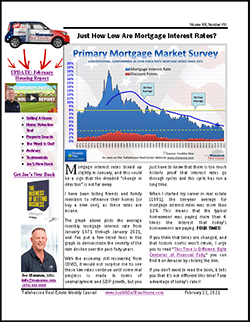
Other buyers, sellers, lenders, and real estate agents have this critical information, and now you can too!
Get immediate access to our most recent newsletter.
Let more than 30 years of experience work for you with charts, graphs, and analysis of the Tallahassee housing market.
Each Monday morning we send out a simple, one-page report that provides a snapshot of the Tallahassee housing market. It only takes 2 minutes to read, but it gives you better market intelligence than most real estate agents possess. Just tell us where to send it below!
The Fed’s Game-Changing Move
Now, you might think lower rates are always good news for buyers. But what if I told you the Fed’s upcoming decision could actually make your dream home slip further out of reach? Let’s break down the domino effect that starts with a simple, interest rate cut.

The Federal Reserve plays a crucial role in shaping the housing market, even if it’s not always obvious. When the Fed adjusts its rates, it sends ripples through the entire economy, including mortgage rates. Right now, experts are predicting two rate cuts by the end of the year. This graph plots mortgage rates against the fed funds rate – they tend to move in tandem, like dance partners. A cut by the Fed typically results in a decline in mortgage rates. For the past 30 years, the 30-year fixed rate mortgage has typically been 3% to 4% above the fed funds rate; today, they are less than 2% apart.
So, what happens when these rates drop? Well, it’s like ringing a dinner bell for hungry homebuyers. Lower rates mean more affordable monthly payments, which can tempt folks who’ve been sitting on the sidelines to jump into the market. Danielle Hale, chief economist at Realtor.com, puts it this way: “The faster rates drop, the less homeowners will be held in place and we could see both new inventory and more sales.” The new inventory and more sales will be good for Realtors, but it will not help the home affordability crisis.
But here’s where things get interesting. Remember the term “lock-in effect”? It’s been keeping a whopping 86% of homeowners, who currently have mortgage rates below 6%, from selling their homes. They’ve been hesitant to give up their sweet, low-rate mortgages. Now, as rates potentially fall, these homeowners might finally feel ready to list their properties.
Sounds great, right? More inventory, more choices for buyers? Well, not so fast. While many see this as good news for the market, it actually has zero impact on our housing shortage. Here’s why: when these homeowners sell, they’ll add one unit of inventory to the market. But guess what? They’ll immediately take away one unit when they buy their next home. It’s like a real estate game of musical chairs where we never add more seats.
The only real solution to our housing crunch is to build more affordable homes. Without new construction, we’re just shuffling the same limited inventory around. And that’s where the trouble really starts.
You see, when mortgage rates drop, it doesn’t just motivate a few buyers – it can unleash a flood of pent-up demand. All those folks who’ve been waiting for rates to come down? They’ll be ready to pounce. And when you have a surge of buyers competing for a still-limited number of homes, what happens? Bidding wars. Multiple offers. Sellers gaining the upper hand in negotiations.
This is where the Fed’s rate cuts could doom home affordability. More buyers with cheaper financing chasing too few homes is a recipe for skyrocketing prices. We saw this play out in dramatic fashion from 2021 to 2023. Rock-bottom rates led to the most explosive run-up in home prices I’ve seen in three decades.
I don’t think two small rate cuts will have a great impact on the lock-in effect, but if the fed funds rate drops below 2% and mortgage rates follow the thirty-year trend, we could see the housing market renew the buying frenzy.
So while lower rates might seem like a win at first glance, they could actually set the stage for an even worse affordability crisis. Imagine finally qualifying for that mortgage you’ve been dreaming of, only to find that home prices have soared out of reach yet again.





Housing Crash or Boom? Here’s What’s Coming in 2025
BIGGEST Housing Market Myth EXPOSED by New Foreclosure Data
History has a funny way of repeating itself, especially in real estate. Remember the frenzy of 2021-2023? Well, we might be heading for round two of the “low rates, high prices” rollercoaster. Let’s take a closer look at what happened during that period and why it’s crucial to understand as we face potential rate cuts again.

Back in 2021, mortgage rates hit historic lows. It seemed like great news for homebuyers, right? But here’s what really went down: those rock-bottom rates unleashed a tsunami of demand. Everyone and their uncle decided it was time to buy a house. The result? Home prices skyrocketed at an unprecedented rate.
Zillow data shows just how wild things got. The red area shows that home prices surged, at one point posting an 18% annual appreciation rate in 2021. But the blue line, mortgage interest rates, shot up rapidly in 2022 and the appreciation rate plummeted to zero (and slightly below).
In some markets, we saw double-digit price increases month over month. Houses that were selling for $300,000 in early 2021 were going for $400,000 or more by 2022. It was like someone poured rocket fuel on the housing market.
Now, you might be thinking, “Okay, but that was then. Things are different now, right?” Well, not as much as you’d hope. We’re still facing a massive housing shortage. Remember, when existing homeowners sell and buy another home, it doesn’t actually add to the overall supply. It’s like a game of musical chairs where we never add more seats.
Dan Hnatkovskyy, CEO of NewHomesMate, puts it bluntly: “Sellers will continue to be in a historically strong position, as the U.S. housing market is still short millions of homes.” That’s not just talk – hard numbers back it up. In my recent video, I shared Kevin Erdmann’s opinion that it will take 17.3 million new homes to level out the housing market.
So what happens when you combine falling interest rates with a persistent housing shortage? It’s a recipe for another affordability crisis. Lower rates might make monthly payments more manageable, but they also embolden buyers to offer more for homes. And with limited inventory, we’re likely to see bidding wars heat up again.
Here’s where it gets really concerning. The housing market is already seriously lacking in affordable options, especially for first-time buyers. In some regions, less than 2% of new homes are priced under $300,000. That’s a tiny sliver of the market for folks trying to get their foot in the door of homeownership.
Now, imagine what happens when rates drop and buyers flood back into this market. Those few affordable homes? They’ll be snapped up in a heartbeat, likely going to the highest bidder. This pushes prices up across the board, making even “starter” homes increasingly out of reach for average earners.
It’s not all doom and gloom, though. Some positive trends are emerging. For instance, the median size of new homes has decreased by 4% in the past year, hopefully the start of an escalating trend. This shift towards smaller homes could help address some of the affordability issues we’re facing. But it’s a slow process, and it won’t solve the problem overnight.
We’re also seeing some local governments start to reconsider zoning laws to allow for more affordable housing options. This is a step in the right direction, but significant changes are still needed to really make a dent in the housing shortage.
So, what does all this mean for you? If you’re in the market for a home, or thinking about selling, you need to be prepared for a potentially wild ride. Lower rates might seem like a golden opportunity, but they could also trigger another round of rapid price appreciation.
Buy Now Or Wait? The 91.6% Rule
Biased Results? The New York Times Rent Or Buy Calculator

Do's And Don'ts During The Home Loan Process

6 Real Estate Contract Terms You Should Not Overlook

7 Tips On Buying A Home With A Pool
How much house can you actually afford (By Income)?

What Does "Marry The House Date The Rate" Mean In Real Estate?

Why Fixer Uppers Are the New Gold | Home Renovation Guide

8 Tips For Buying An Affordable Florida Vacation Home



How To Sell Your House On Your Own

10 PROVEN Strategies To Increase A Home's Selling Profit
2025s HOTTEST Home Selling Strategies You Need NOW
The 3-DAY Method To Sell Your Home For More (2025)

The Best Time To Lower The Price In A Home Sale

How FOMO Makes Your Home Sale More Profitable