Did you know that in 1984, the average home cost about three times the median income?
Fast forward to today, and that number has more than tripled to ten times. This isn’t just inflation – it’s a fundamental shift in home affordability that’s making the American Dream harder to reach than ever before.
In this post, we take a hard look at why buying a house in the US is so tough right now. We compare today’s housing market with past decades to show you exactly why getting your own place has become such a challenge. And here’s something that might surprise you – waiting for prices to drop might not be the smart move you think it is.
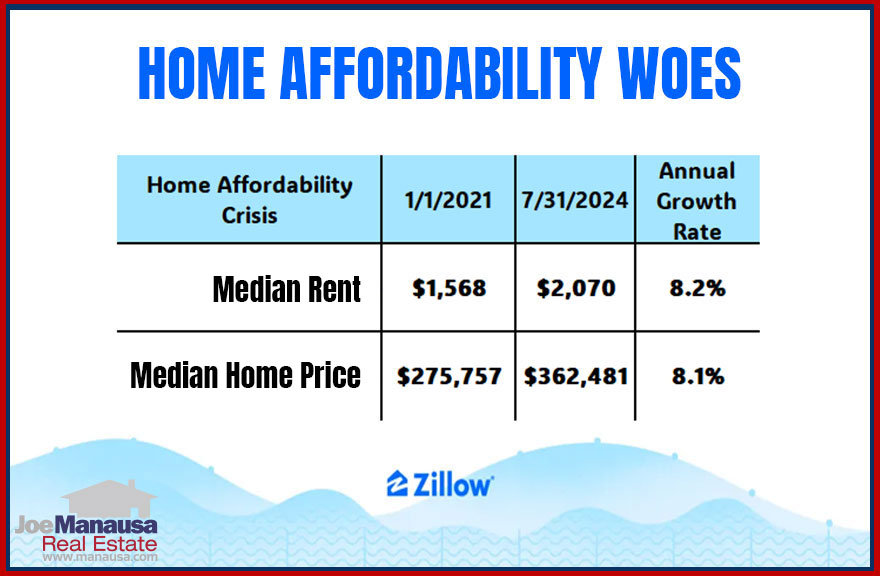
Often, a viewer will comment that are waiting to buy a house, which makes me curious about their alternatives. Since the pre-pandemic period, rents have increased by over 8% annually, mirroring the rise in home prices. Waiting in a rental can be even more costly than waiting in a home you own.
Pay attention—if you’re considering buying a home, understanding these market shifts could help you avoid years of financial strain. The housing market has changed significantly, and it’s crucial to understand why. Let’s explore the current state of home affordability in America.
The Affordability Gap: A Growing Chasm
Now that we’ve set the stage, let’s dive into the numbers that really show how much the housing market has changed. Since 1971, we’ve seen a dramatic shift in the relationship between home prices and incomes. Back then, the median home price was about $24,000, while the median household income was around $9,000. That means homes cost roughly 2.7 times the average annual income.
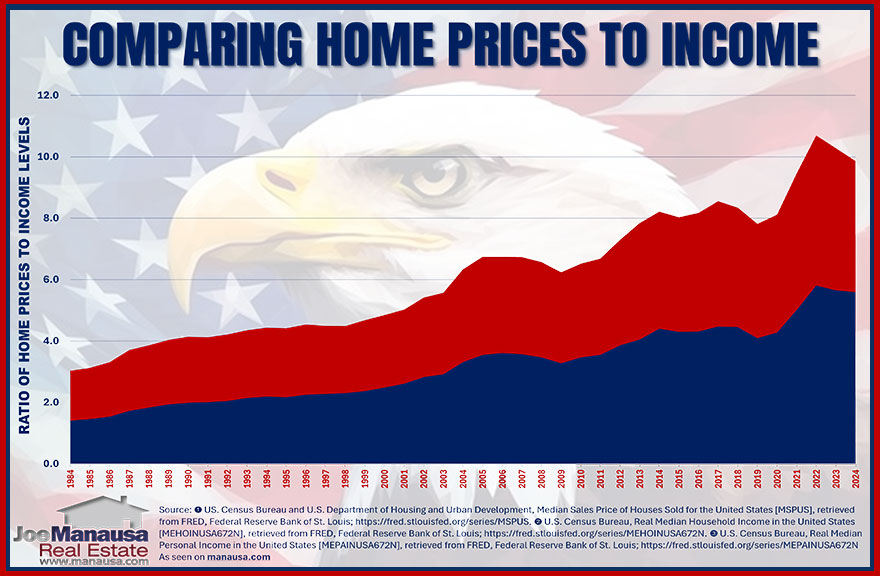
Fast forward to today, and the picture looks very different. The median home price has skyrocketed to about $428,000, but the median household income has only grown to around $74,600. Do the math, and you’ll see that homes now cost nearly 5.7 times the average annual income. That’s more than double the ratio from 1971!
But it’s not just about buying a home. Renting has become increasingly challenging, too. Since 1995, rent prices have surged by a whopping 166.4%. Now, you might think, “Well, surely incomes have kept up, right?” Unfortunately, that’s not the case. During the same period, income growth has lagged far behind, increasing by only 21.4%.
This growing gap between housing costs and incomes is creating a real squeeze for many Americans, especially younger generations. In fact, a recent survey revealed a pretty shocking statistic: 66% of renters believe they’ll never own a home. That’s two-thirds of renters who feel like the American Dream of homeownership is slipping away from them.
Let’s break this down a bit more. For first-time homebuyers today, the financial hurdle is higher than ever. To comfortably afford the principal, interest, taxes, and insurance payments on a median-priced home, a household would need to earn about $95,900 annually. Remember that median income we mentioned earlier? It’s $74,600. That’s a gap of over $21,000!
This disparity explains why so many people feel priced out of the market. It’s not just a perception – it’s a harsh reality backed up by cold, hard numbers. As one industry expert put it, “The idea of being able to save a 20% down payment is almost unimaginable.” And they’re right. With the current median home price, a 20% down payment would be about $85,600. For many Americans, that’s more than their entire annual income!
What’s really concerning is that this isn’t just a short-term trend. As another expert pointed out, “Wages haven’t kept up with the cost of living for the last 50 years or so.” This long-term disconnect between incomes and housing costs has created a perfect storm of unaffordability.
The impact of this affordability crisis is far-reaching. It’s not just affecting individuals and families; it’s reshaping entire communities and altering the trajectory of generations. Young professionals are delaying major life milestones like starting families or pursuing career changes because they’re stuck in a cycle of high rent payments and inability to save for a down payment.
But it’s not just the younger generations feeling the pinch. Even established homeowners are finding themselves “house poor,” with a disproportionate amount of their income going towards housing costs. This leaves less money for other essential expenses, savings, or investments in their future.
So, what does all this mean for you if you’re thinking about buying a home? Well, it’s crucial to understand that the landscape has fundamentally changed. The strategies that worked for previous generations might not be effective in today’s market. You’ll need to be more creative, more patient, and potentially more willing to compromise on certain aspects of your dream home.





Housing Crash or Boom? Here’s What’s Coming in 2025
BIGGEST Housing Market Myth EXPOSED by New Foreclosure Data
Supply and Demand: A Perfect Storm
We’ve discussed the growing gap between incomes and home prices, but that’s only part of the story. Let’s examine the supply and demand dynamics that are really driving this housing crisis.
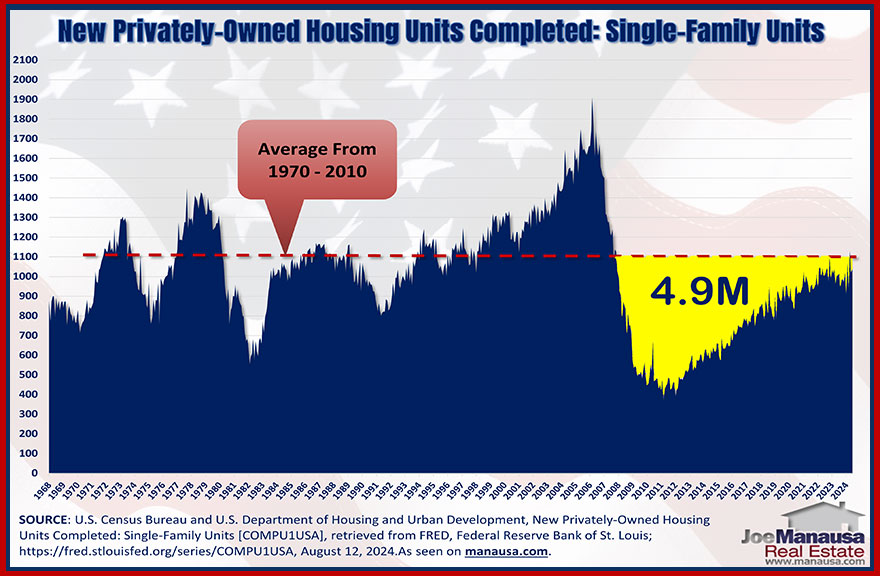
Here’s a shocking statistic: the U.S. is currently short about 5 million homes to meet current demand. That’s right, 5 million. This massive shortage is a key reason why home prices have skyrocketed. It’s simple economics – when demand far outstrips supply, prices go up.
But why aren’t we building more homes to meet this demand? Well, it’s not that simple. Developers are facing a perfect storm of challenges that make it incredibly difficult to build affordable housing.
First, there’s the rising cost of materials and labor. Construction costs have gone through the roof in recent years, making it harder for builders to turn a profit on lower-priced homes. Then there’s the issue of land. In many desirable areas, available land for new construction is scarce and expensive.
But perhaps the biggest hurdle is something called NIMBYism – that’s “Not In My Back Yard.” Many existing homeowners fight against new developments in their neighborhoods, especially high-density housing that could help address the shortage. They’re worried about property values, increased traffic, and changing the character of their communities.
These factors combined mean that builders often can’t make the numbers work for affordable or first-time buyer homes. Instead, they’re focusing on luxury housing where the profit margins are higher. This trend is leaving a huge gap in the market for average buyers.
Now, you might have heard that big corporations are buying up all the houses, making it even harder for individual buyers. But here’s a surprising fact: corporate ownership of single-family rental properties actually remains less than half of one percent of all single-family homes in the US.
However, and this is crucial, the direction of home affordability makes it HIGHLY LIKELY that large investors WILL take over more of the market if nothing is done to fill the void of homes in the US. Think about it – if homes become too expensive for average buyers, who’s left to purchase them? Corporations with deep pockets.
Let me give you a real-world example of how tight the housing market has become. In New York City, the vacancy rate – that’s the percentage of homes that are empty and available – is just 1.4%. For affordable rentals, it’s even lower. That means if you’re looking for a place to live in NYC, whether to rent or buy, you’re facing some seriously stiff competition.
This isn’t just a New York problem. Cities across the country are facing similar crunches. In some areas, homes are selling within days or even hours of being listed, often for well above asking prices. It’s not uncommon to hear stories of dozens of offers on a single property.
From a solutions standpoint, our elected officials need to approach the problem from the SUPPLY side of the table. We need more homes. Critics who call for banning institutional investors haven’t thoroughly analyzed the situation. These investors will naturally exit the market when profits diminish.
Moreover, introducing homebuyer programs with reduced interest rates won’t solve the problem. Demand is already high; it’s the lack of supply that needs attention. Look at what lower rates did to home prices three years ago. It caused a mad rush for homes that did not exist. Multiple offers, sales prices exceeding asking prices. The market is out of balance, so officials must prioritize constructing more houses.
So what does all this mean for you if you’re thinking about buying a home? Well, it means you’re facing some serious headwinds. The lack of supply, combined with high demand and rising costs, has created a market where many potential buyers feel locked out.
But it’s not all doom and gloom. Understanding these market dynamics is the first step in navigating them. Maybe you’ll need to look in different areas than you initially planned. Or perhaps you’ll need to adjust your expectations about your first home. The key is to be informed and prepared. Find the right REALTOR who can guide you to alternative or creative solutions.

The Best Time To Lower The Price In A Home Sale
Want to Sell Your Home Quickly and Profitably? Watch This Now
Time-Lapse Tree Removal!

What Does A Realtor Earn?

How To Sell Your House When You Are In A Hurry

Do's And Don'ts During The Home Loan Process

7 Tips On Buying A Home With A Pool
How much house can you actually afford (By Income)?

What Sellers Need To Know About Robo-Offers In Real Estate
The Financial Squeeze: More Than Just High Prices
Now that we’ve explored the supply and demand issues in the housing market, let’s talk about something that hits even closer to home – your wallet. The financial squeeze on homebuyers today is more intense than ever, and it’s not just about high prices.
2023 was a tough year for homebuyers. In fact, it was the least affordable year to buy a house in the U.S. since the 1980s. You might be thinking, “Wait a minute, I thought home prices stabilized a bit last year.” And you’d be right. But here’s the kicker – rising interest rates offset any relief from slowing price growth.
Think about it this way: even if home prices cool off a bit, higher interest rates also mean higher monthly payments. It’s like trying to grab a life preserver that keeps floating just out of reach.
But high prices and interest rates are just the beginning. Let’s talk about the elephant in the room – student loan debt. Right now, Americans owe a staggering $1.77 trillion in student loans. That’s trillion with a T. And it’s not just a number on a spreadsheet. It’s having a real impact on people’s ability to buy homes.
In fact, 52% of homebuyers say their student loan debt delayed their ability to save for a down payment. That’s more than half of potential buyers who are stuck on the sidelines, watching home prices climb while they’re still paying off their education.
Now, here’s where things get even trickier. You might think that with all these challenges, more people would be selling their homes, right? Well, not exactly. Many current homeowners are finding themselves in a ‘golden handcuffs’ situation.
See, a lot of these folks bought their homes or refinanced when interest rates were at historic lows. We’re talking rates in the 2-3% range. Now, with rates much higher, they’re reluctant to sell. Why? Because selling would mean giving up that sweet, low-interest mortgage and potentially taking on a new loan at a much higher rate.
This ‘golden handcuffs’ or locked-in effect is further limiting the supply of homes on the market. It’s like a game of musical chairs, but nobody wants to give up their seat.
Now, you might be thinking, “This all sounds pretty grim. Is there any good news?” Well, there is a silver lining, but it comes with a catch.
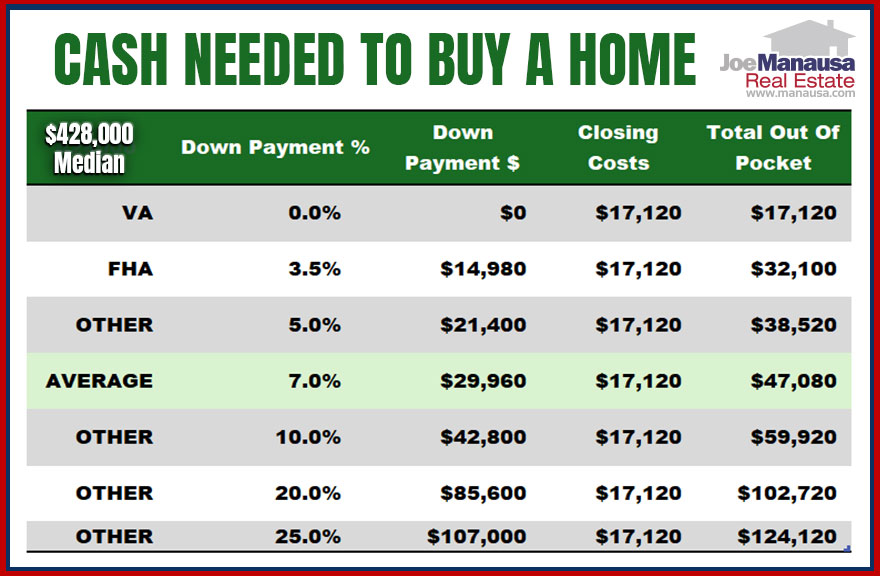
The average down payment for first-time buyers is now around 7%. That’s a lot lower than the traditional 20% down payment we often hear about.
On the surface, this lower down payment requirement might seem like it makes it easier to enter the market. And in some ways, it does. But here’s the catch – even 7% of the median home price is still a substantial amount of money. For many young families, it’s more than they can realistically save.
Let’s put some numbers to this. If we take the median home price of $428,000 we mentioned earlier, a 7% down payment would be about $30,000. Then add another $17,000 in closing costs, meaning even with the lower down payment, it’s still nearly $50,000, a hefty chunk of change, especially when you consider that many people are also juggling student loan payments, soaring rents, and other living expenses.
So, while the lower down payment requirement opens the door a crack, for many, it’s still not wide enough to walk through.
Strategies in a Tough Housing Market
So, we’ve covered a lot of ground. High prices compared to incomes, low supply, rising interest rates, and competition from investors – it’s a tough market out there. But here’s the thing: while prices might level off or dip a bit, the housing shortage will likely keep them from crashing. Long-term affordability problems won’t fix themselves without major changes to increase supply.
Now, you might hear politicians or commenters talking about lower rates or first-time buyer programs. But those are just Band-Aids. They won’t solve the real issue until we build more homes.
If you’re thinking about buying, you need to be strategic. Consider both current conditions and future trends. Don’t just focus on today’s prices or rates.



Fannie Mae Report: It's The TRUTH About The Housing Market
Real Estate Meltdown: Starter Homes at $1M in 233 Cities

Is the Housing Market Crashing? | Redfin April 2025 Update

Is This The CALM Before The CRASH? Volatility Rocks Housing