The Misconception: Why Rate Cuts Aren’t the Magic Fix
There’s a persistent belief in the housing market that a Federal Reserve rate cut is the silver bullet for affordability. Buyers and real estate agents alike often point to lower interest rates as the key to unlocking homeownership—after all, a lower rate means a lower monthly payment. On the surface, this logic appears to be sound. However, the reality is much more complex, and focusing solely on rates overlooks the broader picture.
Affordability is determined by more than just the interest rate on your mortgage. Home prices themselves—and the sheer number of homes available—play just as big a role. If rates fall but prices remain high, or if there simply aren’t enough homes for sale, the relief from a rate cut can quickly evaporate. Lower rates can worsen the situation by fueling increased demand in an already tight market, thereby pushing prices up even further.
A clear example of this dynamic played out during the pandemic. When the Fed cut rates to historic lows, more people could afford monthly payments, but the surge in demand quickly outpaced supply. Bidding wars became common, inventory dwindled, and prices skyrocketed. By the time rates ticked back up, home prices were stuck at new highs, leaving buyers no better off than before. Rate cuts didn’t solve the affordability problem—they just shifted it.
But even if the Fed cuts rates again, another factor can limit the benefit to buyers: the mortgage spread. This is the difference between the interest rate on a 30-year fixed mortgage and the yield on the 10-year Treasury bond.
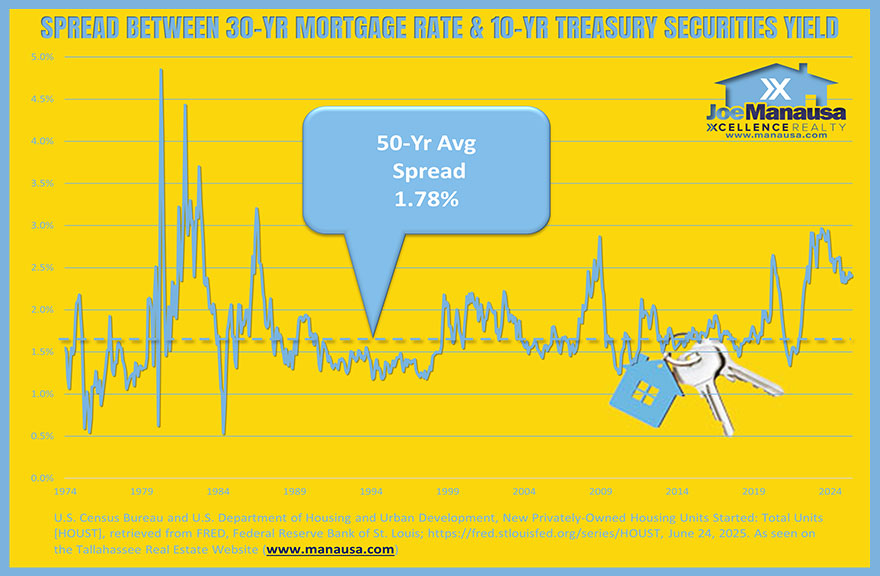
Historically, the spread sits around 1.5 to 2 percentage points. Right now, the spread is about 2.4 percentage points—much higher than usual. That means even if the Fed lowers its benchmark rate, lenders may not pass along the full savings to borrowers. Mortgage rates could stay stubbornly high, and monthly payments might not fall as much as buyers hope.
Let’s put some numbers to this. The median existing home price remains historically elevated, and according to Moody’s economist Nick Villa, even a 25- to 50-basis-point reduction in mortgage rates wouldn’t make buying more affordable than renting. Villa calculates that rates would need to drop below roughly 5.25% on a median-priced home before the math tips in favor of buying. Until then, most buyers won’t see a dramatic change in what they can afford, even if the Fed acts.
The core problem is that rate cuts can spark more demand, but they don’t create more homes. When supply is this tight, more buyers chasing the same limited inventory just pushes prices higher. It’s a cycle that rate policy alone can’t break.
That brings us to a significant reason why the supply side isn’t budging: many homeowners are simply not putting their homes on the market. And to understand why, we need to look at what’s keeping them in place, even when moving might otherwise make sense.
Get Our Free Market Update
Other buyers, sellers, lenders, and real estate agents have this critical information, and now you can too!
Get immediate access to our most recent newsletter.
Let more than 30 years of experience work for you with charts, graphs, and analysis of the Tallahassee housing market.
Each Monday morning we send out a simple, one-page report that provides a snapshot of the Tallahassee housing market. It only takes 2 minutes to read, but it gives you better market intelligence than most real estate agents possess. Just tell us where to send it below!
The Lock-In Effect: Why Homes Aren’t Hitting the Market
Consider a homeowner with a 3% mortgage rate. Even if their family has outgrown their space, moving would mean taking on a new loan at nearly 7%.
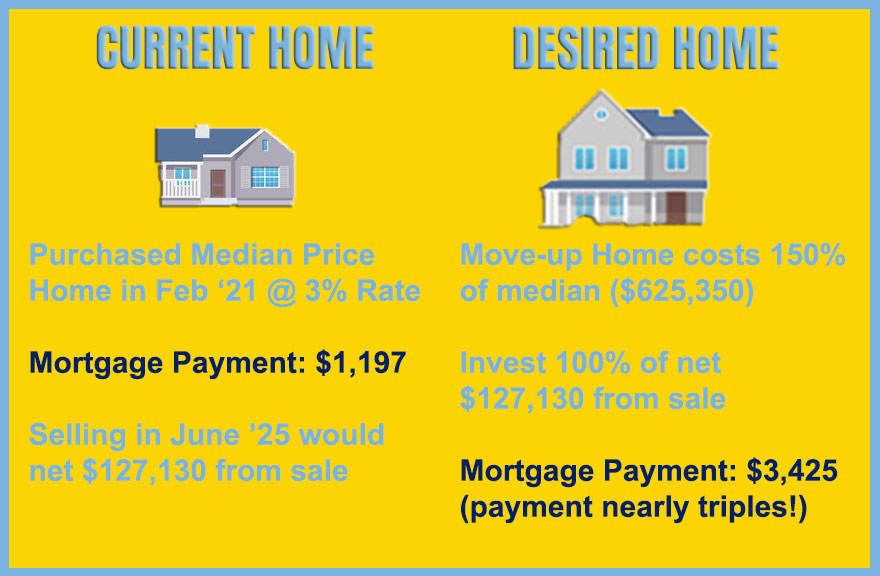
For most, that’s a financial leap they’re not willing to make. Jerome Powell, the Fed Chair, summed it up: “The housing market is, in part, frozen because of lock-in, lower rates, people don’t want to sell their home because they have a very low mortgage, and it would be quite expensive to refinance.” This is what’s known as the lock-in effect, and it’s one of the most potent forces keeping buyers out of the market right now.
The lock-in effect occurs when homeowners choose to stay in their current homes rather than take advantage of historically low mortgage rates. Every time rates rise, some hesitation is usual, but this cycle is different. About 75% of homeowners with a mortgage have a rate below 5%. That means three out of four mortgage holders are locked into ultra-low payments. For many, the cost of selling and taking on a much higher rate just doesn’t make sense. This reluctance to move keeps inventory tight, adding pressure to prices and making it even harder for buyers to find affordable options.
Before 2020, when rates hovered around 4% or 5%, homeowners could move more freely, whether to upsize, downsize, or relocate for a job. Lower rates encouraged this kind of mobility, keeping the market fluid and helping maintain a healthier balance between buyers and sellers. Now, with rates having climbed so quickly, that flexibility is gone. The result is a market where many would-be sellers are effectively trapped in their current homes, unable or unwilling to list.
You can see the impact in the numbers.

In January 2022, the U.S. had just 1.6 months’ supply of homes for sale. By June 2024, that number rose to 4.1 months, a clear increase, but still well below the six months’ supply that’s considered a balanced market. The gridlock means fewer homes are available for buyers, and competition for those that do hit the market remains intense.
Nick Villa, a Moody’s economist, points out that the rapid rise in rates left a lasting mark. He explains, “Anyone who locked in a low rate before doesn’t want to sell and give it up, preventing more supply from being released onto the market.” The lock-in effect has become a bottleneck, hindering the flow of new listings and maintaining elevated prices. In many cities, bidding wars and multiple-offer situations are still common, even as the broader market cools.
This dynamic doesn’t exist in a vacuum. The lock-in effect exacerbates the existing housing shortage, which experts estimate to be between 1.5 and 3.8 million homes, depending on the source. Years of underbuilding created a deficit, and now, with so many homeowners staying put, the gap between supply and demand is even wider. It’s a challenging environment for buyers, where affordability remains out of reach for many, no matter what happens with rates.
But the lock-in effect is only part of the story. Even if more homeowners decided to sell, there still wouldn’t be enough homes on the market to meet demand. To understand why, we have to look at the deeper issue of underbuilding—and how it’s shaped the market we’re in today.


Fannie Mae Report: It's The TRUTH About The Housing Market
Real Estate Meltdown: Starter Homes at $1M in 233 Cities

Is the Housing Market Crashing? | Redfin April 2025 Update

Is This The CALM Before The CRASH? Volatility Rocks Housing

Warning Signs For Home Buyers And Sellers
Underbuilding: The Real Crisis Driving Affordability Issues
The biggest obstacle standing between buyers and affordable homes is underbuilding—a crisis that’s been quietly compounding for well over a decade. Estimates of the housing shortage range from about 3.8 million to as many as 18 million homes, depending on the source. Freddie Mac estimates the deficit at around 3.8 million units. At the same time, housing analyst Kevin Erdmann, using holdhold formation data, calculates that underbuilding since the Global Financial Crisis has resulted in a deficit of at least 15 million homes. Even the most conservative numbers point to a massive gap between what’s needed and what’s available.
This didn’t happen overnight; the downturn that followed the 2008 financial crisis hit builders particularly hard. Construction activity declined significantly, and many developers never fully recovered to pre-crisis levels. Since then, new home construction has consistently lagged behind population growth and the need to replace aging housing stock. Each year that builders fall short, the deficit grows. Over 15 years, that gap has widened into a structural supply issue that now drives much of the affordability crisis.
Even a small annual shortfall in housing production adds up quickly. For over 15 years, the U.S. has failed to build enough homes to keep pace with demand, and the backlog is now so large that it’s affecting buyers in every price range. The result is a market where competition for available homes is fierce, prices are pushed higher, and would-be buyers are left on the sidelines.
So what’s stopping builders from ramping up production? Two main obstacles stand out: rising costs and restrictive zoning.

The cost of materials and labor has surged in recent years, squeezing profit margins and making it harder for builders to take on new projects. At the same time, zoning restrictions and land-use regulations limit where and what kind of housing can be built, slowing down the approval process and reducing the number of homes that reach the market. These barriers don’t just slow construction—they also steer builders toward high-end projects, since those offer the best return, leaving a shortage of affordable options for most buyers.
High interest rates add another layer of difficulty. Just as elevated mortgage rates discourage buyers, they also make it more expensive for builders to finance new developments. Many projects are delayed or canceled because the math simply doesn’t work when borrowing costs are high. This creates a feedback loop—less building leads to a tighter supply, which keeps prices high, exacerbating the affordability problem.
Federal Reserve Chair Jerome Powell has been clear that monetary policy alone can’t solve this. He’s repeatedly pointed out that the real issue is supply: “The market and government must address the supply question.” Without changes to local zoning, streamlined construction processes, and incentives for developers, the housing market will remain stuck in this cycle. The Fed can influence demand, but it can’t build homes or clear regulatory hurdles.
Even if interest rates drop tomorrow, it won’t be enough to spark the wave of building needed to close the gap. The core barriers—costs, regulations, and a backlog of unmet demand—will still be in place. Any surge in buyer interest from lower rates could just drive prices up further, as we’ve seen in recent years when limited inventory led to bidding wars and rapid price increases.
This is the reality at the heart of the affordability crisis. Until the country addresses underbuilding directly, the dream of homeownership will continue to slip further away for many Americans. The numbers make it clear: addressing supply is the only path to real, lasting affordability.



How To Sell Your House On Your Own

10 PROVEN Strategies To Increase A Home's Selling Profit
2025s HOTTEST Home Selling Strategies You Need NOW
The 3-DAY Method To Sell Your Home For More (2025)

The Best Time To Lower The Price In A Home Sale

How FOMO Makes Your Home Sale More Profitable