
At lunch the other day, someone leaned in and asked me:
“So what do you think mortgage interest rates are going to do?”
It’s the question on everyone’s mind — from first-time homebuyers to longtime owners. Rates shape affordability, dictate monthly payments, and influence whether buyers feel confident making a move. Instead of giving a vague answer, I prefer to lay out the facts as they stand today, explain what history tells us, and share my professional belief about where we’re heading.
The Current Picture: What Mortgage Rates Look Like Today
Mortgage interest rates aren’t just numbers on a chart — they decide how much home a family can comfortably buy. As of mid-September 2025, the national average for a 30-year fixed mortgage is about 6.35%, while the 15-year fixed comes in around 5.78%.
Of course, these are averages. A borrower with excellent credit and a substantial down payment might see something lower, while others could see rates higher than the average depending on loan type or market conditions.
Here’s what that means in real life: on buying a $400,000 home with 20% down, today’s interest rates translate into a monthly principal-and-interest payment near $2,000 (before taxes and insurance). If rates were to fall by just half a percent, that same payment would shrink by more than a hundred dollars a month. That’s the real impact of mortgage interest rates — not abstract percentages, but hundreds of dollars gained or lost from your household budget with each slight shift.
The Fed Just Cut Rates — So Why Didn’t Mortgages Drop Overnight?
On September 17, 2025, the Federal Reserve lowered the federal funds rate by 0.25%, bringing its target range to 4.00–4.25%. Many assumed this would mean instant relief for mortgages. But here’s the nuance most people don’t realize: mortgage rates don’t move lockstep with the Fed.
Instead, they’re tied more closely to the bond market — especially the 10-year Treasury yield and mortgage-backed securities. By the time the Fed makes its move, the markets have usually priced in those expectations. In fact, the day of the Fed’s announcement, mortgage rates actually ticked higher because investors focused more on the Fed’s forward guidance than on the cut itself.
So while Fed policy matters, it’s not the “on/off switch” for mortgage interest rates. Rates shift daily — sometimes even intraday — based on how bond traders interpret economic data, inflation trends, and risk in the broader market.
Keep Up With New Trends In Tallahassee!
Get The Tallahassee Real Estate Newsletter
Don't be the one that doesn't know what's going on when you sell a home or buy a home in Tallahassee.
Other buyers, sellers, lenders, and real estate agents have this critical information, and now you can too!
Get immediate access to our most recent newsletter.
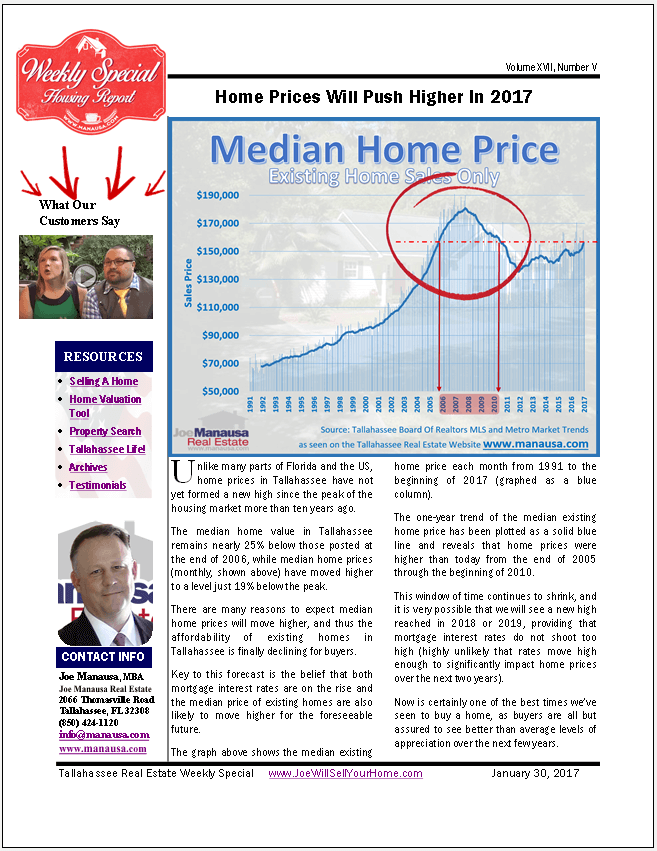
Let more than 30 years of experience work for you with charts, graphs, and analysis of the Tallahassee housing market.
What Really Drives Mortgage Rates
It’s easy to get lost in headlines, but here’s what actually drives the direction of mortgage interest rates in plain English:
-
Inflation: When inflation is high, mortgage rates rise. When inflation cools, lenders are willing to accept lower returns, and rates often ease.
-
Bond yields: Mortgage rates follow the 10-year Treasury yield very closely. Investors see Treasuries as the benchmark for “safe” returns, and mortgages price off that.
-
Market confidence: Strong economic data can push yields higher, while weaker jobs or growth reports often pull them down.
-
Lender spreads: Even when Treasury yields fall, lenders may widen the spread to account for risk, which keeps mortgage rates elevated.
For homebuyers, you don’t need to track every bond auction or inflation release. What matters is understanding that rates move with these forces, not just the Fed alone.
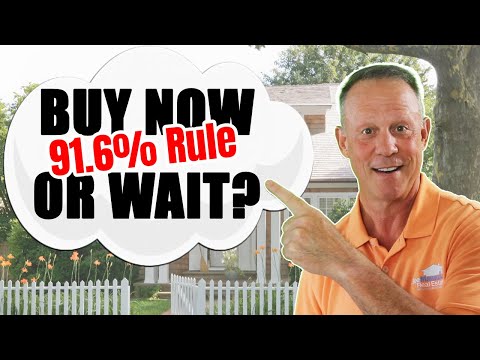
Buy Now Or Wait? The 91.6% Rule
Biased Results? The New York Times Rent Or Buy Calculator

Do's And Don'ts During The Home Loan Process

6 Real Estate Contract Terms You Should Not Overlook
7 Tips On Buying A Home With A Pool

How much house can you actually afford (By Income)?
What Does "Marry The House Date The Rate" Mean In Real Estate?

Why Fixer Uppers Are the New Gold | Home Renovation Guide

8 Tips For Buying An Affordable Florida Vacation Home
My Belief: The 3% Mortgage Is Gone
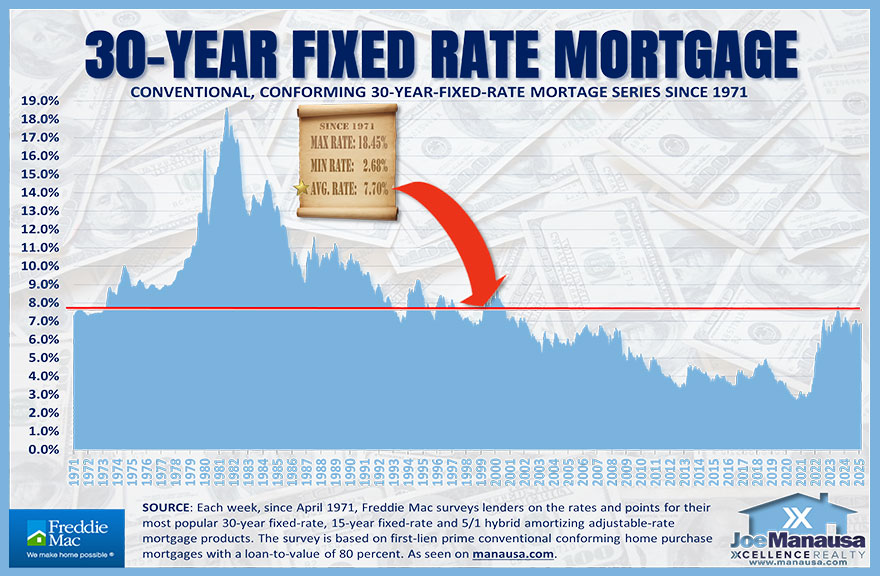
Here’s where I take a firm stance as a broker. The 3% — and even sub-3% — mortgages we saw in 2020 and 2021 were a once-in-a-lifetime event. Freddie Mac’s data shows the all-time low was 2.65% in January 2021. The all-time high was 18.63% in 1981. Over the past fifty years, the average mortgage rate has been 7.70%.
That history suggests something important: over the next fifty years, rates are more likely to trend higher than to revisit those pandemic-era lows. This doesn’t mean we won’t see dips, refinancing opportunities, or stretches where buyers can act at lower-than-average rates. But anyone sitting on the sidelines waiting for 3% to come back is likely waiting in vain.
What I Think Happens Next
Looking at today’s data, I believe we’re entering a period of gradual relief, not dramatic drops. Inflation has been cooling, the Fed has already pivoted with its first cut, and economic growth is showing signs of moderation. Those factors create room for mortgage rates to drift lower — but the market rarely moves in a straight line.
In practical terms, we may see the 30-year fixed rate hover in the mid-6% range, with occasional dips into the low 6s if markets stay calm. But I don’t expect a return to the 4% range anytime soon, let alone 3%.
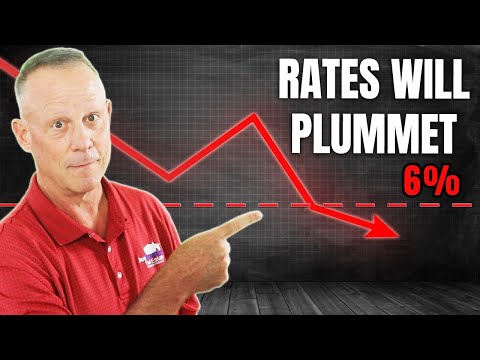
Mortgage Rates Are Expected to PLUMMET Below 6 Percent

Mortgage PITI Explained: Why Mortgage Payments Are Soaring!
Do's And Don'ts During The Home Loan Process
What 'normal' has meant over the years - Understand where rates are going
Will NINJA Loans Bring Down The Housing Market?

Should You Get A 40-Year Mortgage?

10 Mistakes Homebuyers Make In The Home Mortgage Process

What This Means for Buyers, Sellers, and Homeowners
For buyers, the takeaway is simple: don’t anchor your plans to a fantasy number. If today’s rate produces a payment you can afford, and you find a home you love, that’s the window that matters. Remember: refinancing later is always an option if rates improve.
For sellers, recognize that buyers are doing math on monthly payments. A $10,000 price reduction can sometimes make more of a difference to buyers than waiting for rates to move. Pricing strategy should reflect the reality of today’s market, not the memory of yesterday’s.
For homeowners, the key question is whether refinancing makes sense. If you’re holding one of those 2–3% “unicorn” loans, the smartest move is often to stay put. But if your current loan is significantly above market, a half-point reduction could save you thousands over the life of the loan.

Not sure where to start with the pre-qualification process?
Simply tell us who you are and a trusted local mortgage lender will be in touch to answer all of your questions.
The Bottom Line
So when I’m asked, “Where are mortgage interest rates headed?” my answer is this: they’re not going back to 3%. What they will do is shift within a range, with modest improvements when inflation eases and markets stay calm.
Instead of waiting for a miracle rate that history suggests won’t return, the smarter approach is to work with the reality in front of us. The opportunity is in finding affordability today — and being ready to adjust if conditions improve tomorrow.
If you’d like to see how today’s rates affect your specific payment or selling strategy, let’s run the numbers together. Mortgage interest rates are important, but your personal plan matters more.