
“A housing crash is coming!” “Prices will surge in 2025!” If you’re overwhelmed by conflicting headlines, you’re not alone. Every day, bold predictions dominate the conversation—often tied to sweeping changes from the Trump Administration, such as budget cuts, tariffs, and mortgage finance reform. But how much of it is supported by actual data?
Today’s update cuts through the noise. I’m presenting real analysis based on the latest Home Price Expectations Survey from Fannie Mae. This data-driven forecast reflects input from 108 experts—economists, housing researchers, and mortgage professionals—not internet speculation.
So, what does this expert survey suggest about a potential housing crash?
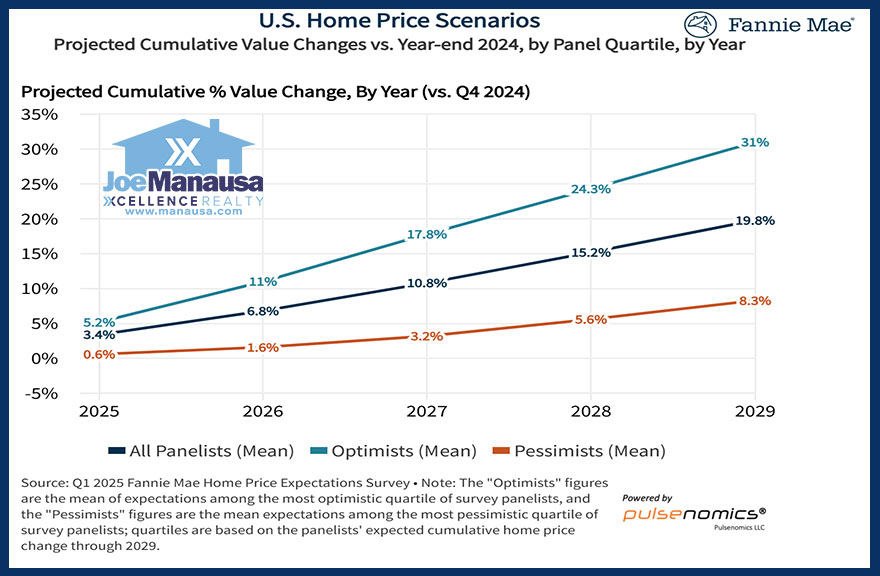
In reality, the forecast calls for moderate, steady growth: 3.4% in 2025 and 3.3% in 2026. Not a crash. Not a boom. Just a market adjusting.
In the video and discussion below, I’ll walk you through what this means for you—whether you’re buying your first home, selling your current one, or simply trying to navigate today’s unpredictable market with confidence.
The Market Reality Gap
Let’s be real—there’s a significant disconnect between perception and reality in housing. Social media is full of attention-grabbing headlines and self-proclaimed experts making bold claims. But those narratives often lead people to make poor financial decisions.
I’ve seen it firsthand. I saw a grossly overpriced listing hit the market several months ago, about 15% above fair market value. He must have seen a viral video about a “seller’s boom.” He got no offers. After two price cuts and three months of stress, he sold for below what he could’ve gotten with a better strategy. A recent comment from a viewer who delayed purchasing based on a 10% price drop prediction. That drop never came. Instead, prices rose, and he spent $22,000 more for a similar home.
So what’s really happening?
According to the Fannie Mae survey, the 2024 market saw a 5.8% price increase nationwide. For 2025, they expect that to slow to 3.4%, with a similar pace in 2026. This isn’t a market in crisis—it’s correcting to more sustainable levels.
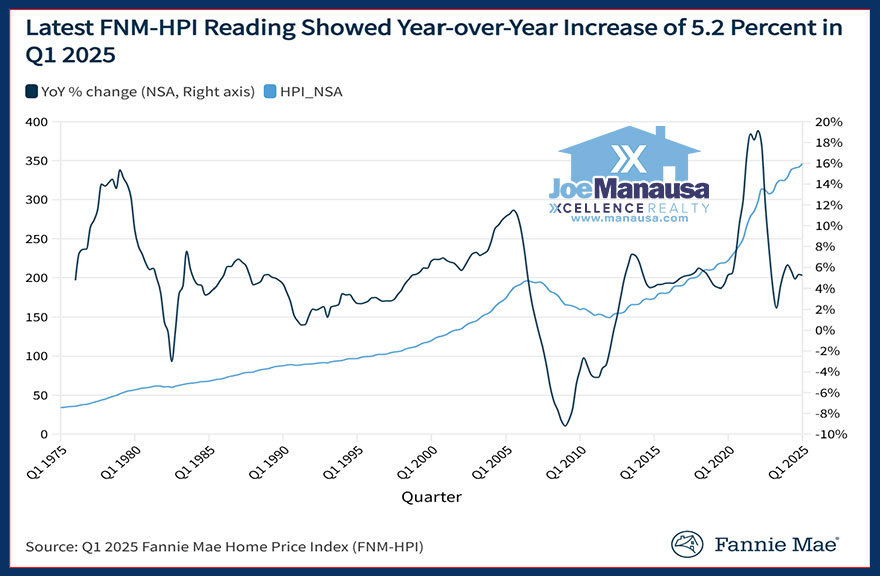
And that’s a good thing. Rapid home price increases, like we saw during the pandemic, create volatility and fear of missing out. On the flip side, market crashes destroy wealth and confidence. A steady 3–5% annual growth is not only healthy, it’s historically consistent.
If you’re a homeowner, this means your investment is still growing, just at a more predictable pace. If you’re a buyer, it means you have more breathing room. And if you’re selling, you’ll need to adjust expectations and lean into strategy over hype.
Keep in mind that not all markets are equal. In places like Phoenix, homes under $500K sell fast, while luxury listings sit longer. Similar patterns are showing up in Austin, Tampa, and parts of the Midwest. So make sure you’re using local comps, not just national headlines. Drop your metro area in the comments—I’ll give you customized insights.
Keep Up With New Trends In Tallahassee!
Get The Tallahassee Real Estate Newsletter
 Don't be the one that doesn't know what's going on when you sell a home or buy a home in Tallahassee.
Other buyers, sellers, lenders, and real estate agents have this critical information, and now you can too!
Get immediate access to our most recent newsletter.
Let more than 30 years of experience work for you with charts, graphs, and analysis of the Tallahassee housing market.
Mortgage Rate Relief
Let’s talk about interest rates—arguably the most critical lever in today’s market.

For the past three years, mortgage rates have been a serious obstacle. Many buyers who were pre-approved in 2021 or 2022 suddenly found themselves priced out as rates soared. And that’s not just theoretical. I work with many first-time homebuyers who spent years saving for their first home. With recent price surges and today’s higher rates, their monthly payments are coming in around $600 higher than expected. Many are choosing to rent apartments instead of getting a single-family home.
Here’s the shift: Fannie Mae’s latest economic forecast expects rates to fall to 6.3% by the end of 2025, and slightly further to 6.2% in 2026. These may not feel “low,” but they represent a meaningful drop from today’s 6.8–7.3% levels.
This seemingly small shift has a big impact. A half-percent reduction in interest rate can mean savings of $200 to $400 per month on a $320,000 mortgage. That’s money that can fund your car payments, college savings, or help you qualify for a better neighborhood.
Lower rates will also reignite market activity. Buyers who’ve been sitting on the sidelines will start jumping back in. Sellers will benefit from larger buyer pools. And current homeowners—especially those who bought in the past year or two—may soon be able to refinance into lower monthly payments. In fact, one couple I spoke with had paused their home search due to affordability. With this new rate forecast, they’ve revived their plans and expanded their budget by $75,000. That’s the power of improved financing conditions.




Fannie Mae Report: It's The TRUTH About The Housing Market

Real Estate Meltdown: Starter Homes at $1M in 233 Cities

Is the Housing Market Crashing? | Redfin April 2025 Update

Is This The CALM Before The CRASH? Volatility Rocks Housing

Warning Signs For Home Buyers And Sellers





Housing Crash or Boom? Here’s What’s Coming in 2025