
Point #5: Why Inventory Increases Aren’t Crashing the Market
Mortgage lock-in keeps inventory low, even as we see more homes hitting the market. Many homeowners are sitting tight, and it’s not just out of habit—it’s a financial calculation. Over the last several years, millions of people secured mortgages at rates well below today’s near 7% average for a 30-year fixed loan. Trading in that lower payment for a much higher one doesn’t add up for most families. That’s the heart of the “mortgage lock-in effect.”
This effect is reshaping the market. Homeowners who might have sold and bought again are holding back, which limits both the new supply and the number of buyers. The result is a market that feels stuck, with fewer homes for sale than you’d expect in a typical year, and fewer buyers active in the market. Even as new listings rise, the overall inventory is still constrained.
Let’s look at the numbers.

The total active inventory in May reached 1.4 million homes, representing a 22.9% year-over-year increase. However, that’s still 20% lower than what we saw before the pandemic, when inventory reached its recent peak, and a whopping 65% lower than what we saw during the 2008 housing market crash. So, while it may look like homes are flooding the market, the truth is we’re nowhere near the supply glut that would trigger a price collapse.
There’s also a persistent housing shortage in the U.S.—Zillow’s recent estimate puts the deficit at about 4.7 million homes. Estimates by housing market analyst Kevin Erdmann put the deficit at over 15 million homes. The housing shortage acts as a buffer, preventing prices from falling even as more sellers list their homes for sale.
The bottom line is that rising inventory isn’t the red flag that fear mongers make it out to be. Instead, it’s a sign that the market is moving toward balance, not collapse. But inventory is just one piece of the puzzle. To understand where the market stands, we need to examine the current state of home prices and the financial health of today’s homeowners.
YOU CAN SELL A HOUSE ON YOUR OWN!
 One thing you need to understand right up front is that the only differences between you and a real estate professional or another “For Sale By Owner” are knowledge and experience. Experience is tough to gain but knowledge is available right here.
Point #4: Home Equity Reaches Highest Level On Record
One of the biggest reasons the housing market isn’t teetering on the edge of disaster is the amount of equity homeowners have built up in recent years.

Unlike the run-up to 2008, when millions of people owed more than their homes were worth, today’s homeowners are in a much stronger position. Home values have appreciated steadily, and most owners now have a significant financial cushion, owing roughly 45% of their home’s value. This means if someone faces hardship or needs to move, they can usually sell their home, pay off their mortgage, and often walk away with money in their pocket. That kind of positive equity makes it far less likely we’ll see a wave of distressed sales or defaults.
Point #3: The Mortgage Lock-In Effect and Pent-Up Demand
Another major force shaping the current market is the combination of the mortgage lock-in effect and pent-up demand. Homeowners who locked in mortgage rates below 5% face a tough decision: sell now and take on a much higher rate, or stay put and keep their monthly payments low. For most, the math is simple—they stay. This reluctance to move has a direct impact on the number of homes available for sale. It’s not just a minor trend; it’s a defining feature of today’s housing landscape.
And you can see the effects in the numbers.

Newly pending sales are down 2.5% from a year ago, even though average mortgage rates have ticked lower recently. That slowdown isn’t because buyers have lost interest—it’s because there aren’t enough homes hitting the market, and that has driven up prices. In competitive areas, the few listings that do come up often attract multiple offers, driving prices higher and making it harder for new buyers to break in. More than one in four home sellers receive an offer exceeding their asking price. Would that would be possible if there were too many homes available?
The interplay between a locked-in homeowner base and a structural housing shortage creates a market where prices remain resilient. Even as some regions cool off slightly, the overall balance of supply and demand is still tilted in favor of stability. These underlying factors are essential to consider as we attempt to make sense of today’s headlines about housing risks.
To better understand why the current market is so different from the last big downturn, it helps to look back and compare what’s happening now to what happened in 2008.
Get Our Free Market Update
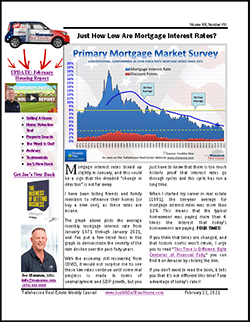
Other buyers, sellers, lenders, and real estate agents have this critical information, and now you can too!
Get immediate access to our most recent newsletter.
Let more than 30 years of experience work for you with charts, graphs, and analysis of the Tallahassee housing market.
Each Monday morning we send out a simple, one-page report that provides a snapshot of the Tallahassee housing market. It only takes 2 minutes to read, but it gives you better market intelligence than most real estate agents possess. Just tell us where to send it below!
Point #2: Home Prices – Steady in Most Cities, Even Growing in Some
I suspect when you see headlines promising home prices will drop 60%, you get a twinge of fear in your gut and wonder, “Should you sell and rent to wait it out?” I, on the other hand, chuckle when I see those videos. They perform very well, which is why they are published, but they lack support from facts and data. They want your click and view, and they’ll publish anything to achieve it.
When you see another crash headline, remember this simple point: Inflation is very real. Have you noticed you are spending more on everything these days? I don’t expect car prices to drop 60%, do you? I bet a can of Coke will cost over $5 in thirty years. Why? Inflation! That’s why.

Look at the long-term growth of U.S. home prices. How many crashes do you see? In the past 100 years, the market has crashed 3 times. The first was during the Great Depression, the 2nd during World War II, and the third was during the Great Recession. I suspect that most channels calling for a crash are aware they are disseminating misleading information. Still, for those that are uninformed, they are suffering from Recency Bias, expecting crashes as some kind of cyclical norm.
The only time we see prices decrease is when supply exceeds demand. If 20 million new homes were built this year and spread around to where they are needed, we would have too many homes, and prices would come down. However, today’s market is the opposite, having experienced nearly 20 years of underbuilding.
The deficit of homes is great enough now that we know supply will not run too far away from demand, even at today’s ultra-low buyer activity.





Housing Crash or Boom? Here’s What’s Coming in 2025

BIGGEST Housing Market Myth EXPOSED by New Foreclosure Data
Point #1: Why 2025 is Not 2008: Supply and Demand Then vs. Now
The most significant difference between today’s housing market and what we saw in 2008 comes down to the basic relationship between supply and demand.

At the time, inventory levels were significantly above historical norms, with an accumulation of unsold homes on the market. The result was a glut of more than 4 million properties, which put intense downward pressure on prices. In contrast, 2025 is defined by a persistent housing shortage. Months of supply remain under 5, and even with some recent increases in inventory, we’re still 65% below the levels that flooded the market before the last crash.
But it wasn’t just oversupply that created the conditions for disaster in 2008. Lending standards at the time were extremely loose. Lenders approved subprime mortgages and adjustable-rate loans for buyers with little or no verification of income or creditworthiness. When those teaser rates reset, millions of homeowners could no longer afford their payments, triggering a wave of defaults and foreclosures. Today’s market is built on a much more solid foundation. Loans now require verified income and strong credit scores, making it much harder for borrowers with risky financial profiles to get in over their heads. This shift in lending practices means most homeowners are better positioned to handle economic changes.
Another key difference is the amount of equity homeowners now have. During the crash, home values dropped so quickly that millions found themselves owing more than their homes were worth. Foreclosures spiked, and the market unraveled. Now, after years of steady price appreciation and careful lending, homeowners have record levels of equity. If someone faces financial trouble, they can often sell their home, pay off their loan, and avoid foreclosure altogether. That’s a massive change in the underlying risk.
Demand is also playing a crucial role. Zillow reports the U.S. faces a housing deficit of roughly 4.7 million homes, a gap created by years of underbuilding since 2008. While 1.4 million homes were added to the supply in 2023, that still falls short of the 1.8 million new families formed that year. This persistent shortage keeps competition for homes strong, even with higher mortgage rates.
If the 2008 crash was like a dam bursting under the weight of oversupply and risky loans, today’s market is more like a steady stream, constrained but stable. The fundamentals of supply, demand, equity, and lending have shifted, and that’s why the outlook now is so different from the last downturn.
With all this in mind, let’s step back and consider what these facts really mean for the market’s direction.



How To Sell Your House On Your Own

10 PROVEN Strategies To Increase A Home's Selling Profit
2025s HOTTEST Home Selling Strategies You Need NOW

The 3-DAY Method To Sell Your Home For More (2025)

The Best Time To Lower The Price In A Home Sale

How FOMO Makes Your Home Sale More Profitable