Since 2015, the poorest Americans have spent 45% more on rent, while the richest? Only 20% more. This housing market disparity represents a crisis eroding millions of families’ financial foundations.
 According to Kevin Erdmann’s groundbreaking research, our current housing policies are creating a two-tier economy that’s leaving most Americans behind. If you’ve wondered why homeownership feels increasingly out of reach despite your hard work, this isn’t your imagination. The harsh reality is that systematic issues widen the gap between the housing haves and have-nots.
If you follow along in the video or narrative below, it will completely change how you understand what’s happening in today’s real estate market.
The Hidden Inequality in Housing Data
Looking beyond the national averages reveals a troubling truth about America’s housing crisis—it’s devastatingly hitting lower-income Americans while barely touching the wealthy. Kevin Erdmann’s analysis of Zillow data exposes what many families already feel in their monthly budgets: We’re living in a two-tier housing market that’s been steadily diverging since 2015.
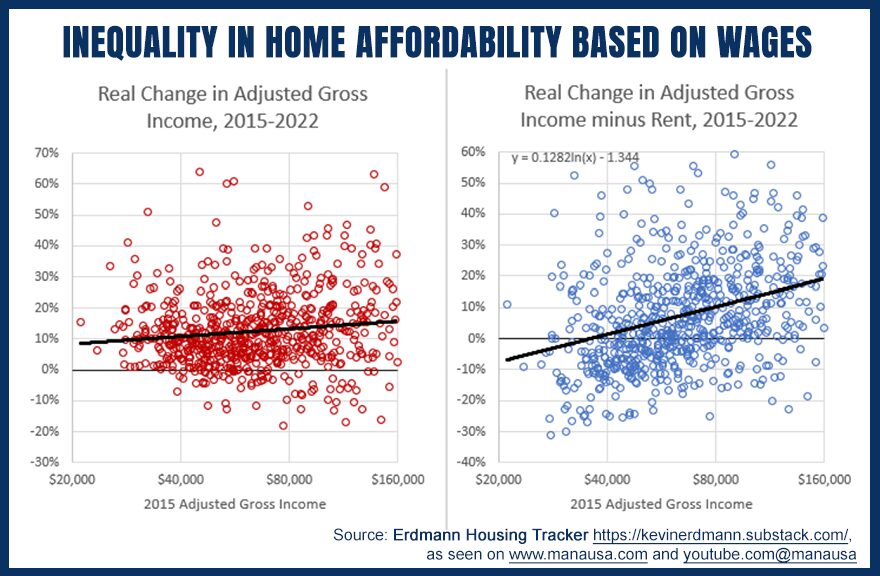
Figure 1 from Erdmann’s research tells a stark story. When we track rent changes across ZIP codes divided by income levels, we see that the poorest neighborhoods have experienced rent increases more than twice the rate of wealthy areas. This disparity manifests in real numbers:
Imagine two families renting in your city. One family earns $50,000 annually, while the second earns $250,000. If both experience a $250 monthly rent increase, it represents 6% of the poorer family’s income, while the wealthier family only has to shell out 1% of its income.
Families in the poorest ZIP codes now spend approximately 45% more on rent after adjusting for inflation compared to 2015, while households in the wealthiest neighborhoods have seen increases of only about 20%. The result is that lower-income families’ rents rise faster than their wages, while higher-income families’ wages increase faster than their rents.
This reality creates what economists call a market in disequilibrium – where inflationary pressures in the housing sector have outpaced lower-income families’ ability to find affordable housing. For a family earning $30,000 annually, a 45% rent increase might mean choosing between adequate housing and other essentials like food, healthcare, or education. Their financial security becomes compromised, reducing savings, increasing reliance on high-interest debt, and diminishing economic advancement opportunities.
The housing shortage has created an inflationary environment that disproportionately impacts those least able to absorb it. Finding affordable housing has become increasingly difficult for those at the bottom of the economic ladder.
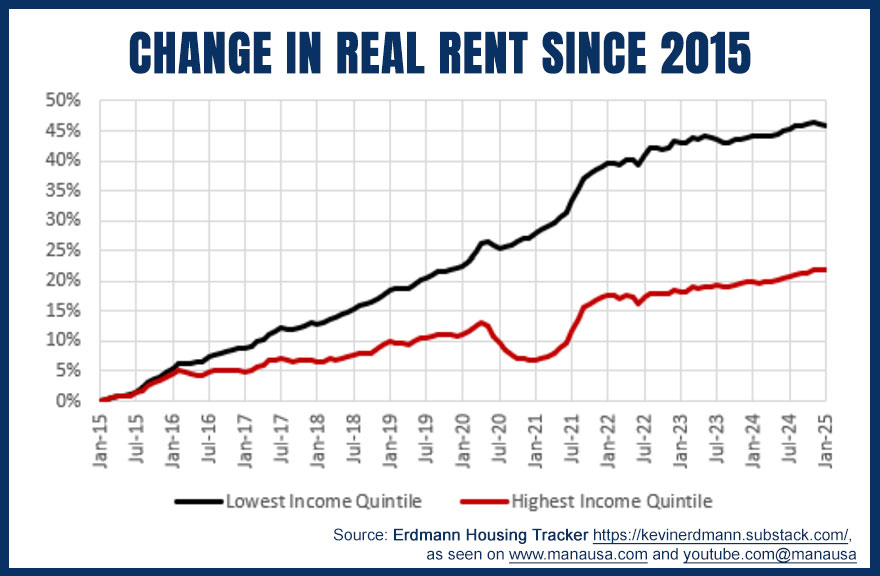
This rent inflation pattern revealed in Figure 2 has fascinating implications for the price-to-rent ratio across different income levels. Contrary to what many might expect, price-to-rent ratios are several times higher in wealthy ZIP codes than in poorer neighborhoods. This relationship is primarily driven by rents—higher rents lead to higher price-to-rent ratios, a connection often overlooked in economic analyses.
These ratios climb significantly higher in rich ZIP codes because higher rents correlate with higher incomes. This creates an unexpected relationship between neighborhood income levels and mortgage affordability. While rents remain systematically tied to income levels, mortgage affordability doesn’t follow the same pattern, creating additional hurdles for potential homebuyers, especially in middle-income areas trying to transition to homeownership.
This disconnect becomes particularly problematic when considering how mortgage lending practices have evolved since the 2008 financial crisis. Increased scrutiny and tightened lending standards have reinforced these disparities, making the transition from renting to owning far more difficult for many Americans.
Perhaps most concerning is the gap between reported inflation and what Erdmann calls “lived inflation.” While official economic reports have shown average inflation rates around 2% over the past decade, the reality for many American families has been dramatically different. When accounting for these disproportionate housing costs, lower-income households have effectively experienced inflation rates closer to 4% annually.
This two-percentage-point gap, compounded over a decade, represents a significant erosion of purchasing power for those already struggling. As housing consumes an ever-larger portion of lower-income families’ budgets, less money remains for necessities and investments that might help them advance economically, creating a self-reinforcing cycle of economic stagnation that’s difficult to escape.
Keep Up With New Trends In Tallahassee!
Get The Tallahassee Real Estate Newsletter
 Don't be the one that doesn't know what's going on when you sell a home or buy a home in Tallahassee.
Other buyers, sellers, lenders, and real estate agents have this critical information, and now you can too!
Get immediate access to our most recent newsletter.
Let more than 30 years of experience work for you with charts, graphs, and analysis of the Tallahassee housing market.
The Affordability Crisis Mechanics
This cycle of economic stagnation isn’t just a matter of high rents – it’s a fundamental breakdown in how housing markets function. When we dive into Erdmann’s research, a troubling pattern emerges: A household making $60,000 today faces the same mortgage-to-rent challenges as someone earning twice that amount did just eight years ago. This shocking compression of purchasing power reveals the mechanics behind our affordability crisis that most economists or mainstream media haven’t fully acknowledged.
Erdmann’s data exposes a mortgage affordability system that operates entirely differently depending on your income level. In cities where housing is scarce, the wealthiest residents barely notice changes in their price-to-income ratios, continuing to pay roughly the same proportion of income toward housing. But for those at lower incomes, these ratios spike dramatically.
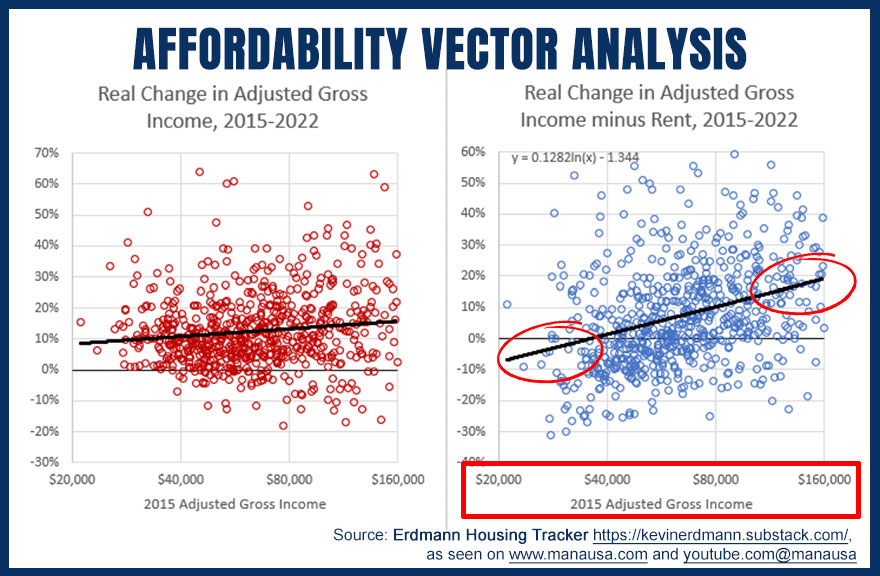
Figure 3 in Erdmann’s research visualizes this disparity through affordability vector analysis, showing higher-income households continue gaining wealth while lower-income households fall further behind.
On average, the mortgage/rent ratio has risen by nearly 1/2 point since 2015, but that means that a household with about $60,000 income today would face the same ratio that a family with $120,000 income faced in 2015. This effectively erases income gains for working-class families attempting to transition from renting to owning, fundamentally changing the wealth-building mechanism serving generations of Americans.
Post-2008 policies intended to stabilize the housing market exacerbated these problems. Following the financial crisis, the mortgage crackdown implemented binding lending standards that, while designed to prevent another catastrophe, inadvertently tightened the path to homeownership that worked effectively for the fifty years prior. Erdmann’s research reveals these profound unintended consequences: “The negative supply effects of the mortgage crackdown on rising rents have been much stronger than the negative demand effects on declining prices. The mortgage crackdown hurt households in the most fundamental measure of housing affordability – rent. But, in the end, it made ownership more expensive too.” This underscores how regulations can backfire without addressing the housing supply.
The consequences become clear when examining income growth after accounting for housing costs. From 2015 to 2022, families in the lowest income quintile experienced virtually no income growth after paying rent. Real adjusted gross income after rent expenses in these neighborhoods averaged a negative 1.9% growth. Wage increases these families secured were immediately consumed by higher housing costs, preventing economic advancement.
This creates a self-reinforcing cycle, blocking mobility across multiple dimensions. Without accumulating savings, lower-income households can’t gather down payments. They remain trapped in an increasingly expensive rental market without affordable mortgage options. Without homeownership’s wealth-building potential, they can’t pass assets to the next generation, perpetuating intergenerational inequality.
What makes this particularly frustrating is that we’re dealing with a supply problem misdiagnosed as a demand issue. Erdmann’s analysis demonstrates that insufficient housing supply is driving our affordability crisis. In markets with adequate construction, affordability vectors remain more stable across income levels. When enough homes exist, the market operates more fairly for everyone.




Housing Crash or Boom? Here’s What’s Coming in 2025

BIGGEST Housing Market Myth EXPOSED by New Foreclosure Data
We Need To Build More Homes
Erdmann’s research reveals a clear solution hiding in plain sight: We must build more affordable homes.
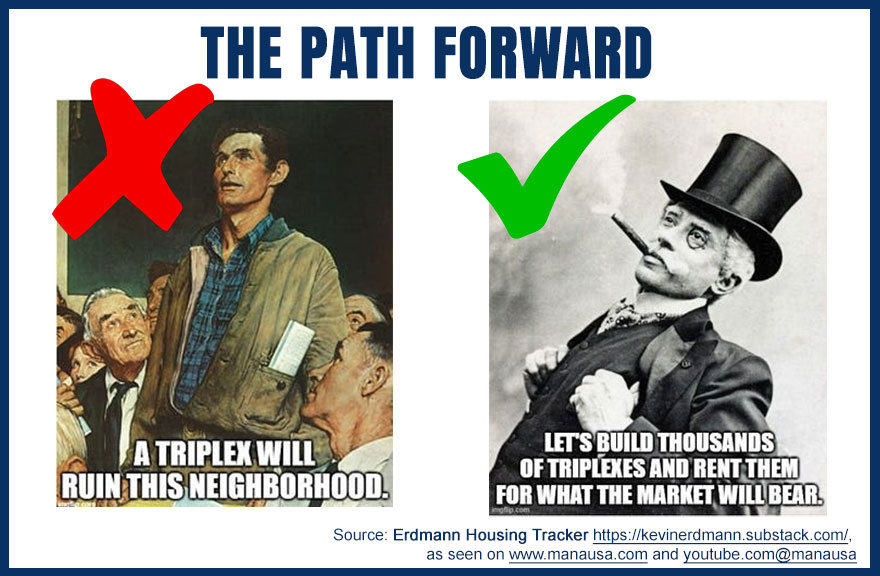
Increasing residential development can extract income from speculative rent-seekers and redirect it to vulnerable populations. From 2015 to 2024, real incomes after rent in the bottom quintile rose by 6.6% when building conditions improved.
The path forward requires shifting from restrictive policies to a proactive approach encouraging increased construction. As Erdmann emphasizes, allowing people to build homes has been fundamental to human progress for centuries.
There are some sure-fire warning signs for home buyers and sellers that you should know. You can learn all about them in my recent video using Zillow data by clicking on the box on the right side of your screen.