
The $2,070 Burden: Unpacking Record-High Mortgage Payments
Imagine opening your mortgage statement to find a payment that’s $600 higher than just four years ago. That’s not some far-fetched scenario – it’s the reality for many homeowners today. Let’s break down what’s happening with mortgage payments and why they’ve hit an all-time high.
As of August 2024, the average monthly mortgage payment, including principal, interest, taxes, and insurance, PITI, has nearly reached a staggering $2,600. That’s $140 more than just a year ago and a whopping $599 higher than at the start of 2020. We’re talking about a 30% increase in less than five years.
Mortgage Payment Breakdown
The situation is even more dramatic for mortgages taken out in the last two years. These homeowners are facing payments that are, on average, $600 higher than mortgages from 2020 and 2021.

Two-thirds of each payment goes straight to interest. You’re paying more but building equity at a slower pace.
Let’s put that into perspective. If you got a mortgage in 2023 or 2024, only 12% of your monthly payment goes towards paying down your principal, which is better than the fifty-year average, yet less than half of what recent mortgage holders put towards the principal. For buyers who had to abandon a low-interest rate loan to buy a new home, it’s like trying to fill a swimming pool with a teaspoon – you’re making payments but barely making a dent in your actual loan balance.
You might be thinking, “Well, at least older mortgages are in better shape, right?” Well, yes and no. While it’s true that older mortgages generally have lower PITI payments, they’re not immune to rising costs. About 35% of those payments are variable costs like taxes and insurance. And those costs? They’re definitely not staying put.
Since the start of 2020, principal, interest, and tax payments have increased by 15-17%. That’s significant, but it pales in comparison to what’s happened with property insurance. Hold onto your hats—insurance costs have surged by a mind-boggling 52%.
And brace yourself if you’re in an area with high property taxes, like parts of the Southeast. In some of these states, more than 40% of the average mortgage payment can be attributed to these variable costs. That’s a massive chunk of your payment that’s subject to increase, potentially putting even more financial strain on homeowners. And if you are a renter, you can expect these increases to add to your rent payment each year.
So, what does all this mean in the grand scheme of things? Well, we’re looking at higher mortgage payments than they’ve been in the past 24 years. It’s not just about interest rates anymore – there’s a perfect storm of factors driving up costs and making homeownership more expensive than ever.
But the story doesn’t end with principal and interest. There’s another culprit lurking in your monthly statement, and it’s one that’s often overlooked until it’s too late. Stay tuned because we’re about to dive into the hidden factor silently driving up your housing costs, even if your mortgage rate hasn’t budged.
Get Our Free Market Update
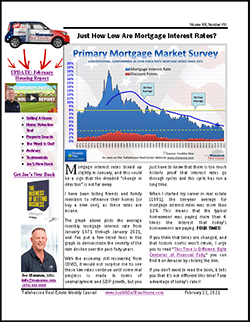
Other buyers, sellers, lenders, and real estate agents have this critical information, and now you can too!
Get immediate access to our most recent newsletter.
Let more than 30 years of experience work for you with charts, graphs, and analysis of the Tallahassee housing market.
Each Monday morning we send out a simple, one-page report that provides a snapshot of the Tallahassee housing market. It only takes 2 minutes to read, but it gives you better market intelligence than most real estate agents possess. Just tell us where to send it below!
The Insurance Surge: When Protection Becomes a Problem
You’ve heard of the perfect storm in real estate, but what if I told you there’s a tsunami brewing in your mortgage payment? It’s not interest rates this time. It’s a cost that’s surged nearly 12% in less than two years, and it’s affecting homeowners from Miami to Oklahoma City. The kicker? You’re probably paying for it without even realizing how much it’s costing you.
We’re talking about insurance. That often-overlooked component of your PITI – Principal, Interest, Taxes, and Insurance. And it’s not just a small part anymore. In fact, insurance now accounts for a whopping 9.4% of monthly mortgage payments, up from less than 7.7% just a few years ago. That’s the highest share on record, and it’s changing the game for homeowners across the country.
Let’s break it down. Since 2020, we’ve seen the average cost of insurance jump from $4.65 to $5.38 per $1,000 of coverage. That might not sound like much, but it adds up fast.

On a $300,000 home, you’re looking at an extra $219 per year. And that’s just the national average – in some areas, it’s much, much worse.
Take New Orleans and Miami, for example. These cities are seeing annual insurance premiums averaging around $17 per $1,000 of policy coverage. That’s more than triple the national average! Imagine paying $5,100 a year just for insurance on that same $300,000 home. It’s enough to make anyone’s wallet weep.
But here’s the thing – this isn’t just a coastal issue anymore. Areas like Oklahoma City are feeling the pinch too, with insurance accounting for over 15% of monthly mortgage payments. That’s right, tornado alley is getting hit just as hard as hurricane zones. It’s a stark reminder that climate risks are reshaping the insurance landscape across the entire country.
The impact of this insurance surge is rippling through the housing market in ways we’ve never seen before. Remember when we talked about those record-high mortgage payments? Well, insurance plays a bigger role in that equation than ever. It’s like a silent tax on homeownership, creeping up year after year.
And it’s not just insurance. Property taxes are on the rise too, adding to the burden.

In some parts of the Southeast, these variable costs – taxes and insurance combined – can make up more than 40% of the average mortgage payment. That’s a huge chunk of your housing costs that can increase at any time, potentially catching homeowners off guard.
So, what does all this mean for you? Well, if you’re a homeowner, it’s time to take a closer look at your mortgage statement. That insurance line item might be a lot bigger than you remember. And if you’re thinking about buying a home, you need to factor in these rising costs when calculating what you can afford. And renters, you can expect to see rents rising faster than normal to cover these additional landlord costs.
The days of insurance being a small, predictable part of housing costs are over. We’re in uncharted territory now, where protecting your home could cost as much as building equity in it. This new reality is reshaping the financial landscape of homeownership across America.
As we’ve seen, costs are rising across the board – from principal and interest to taxes and insurance. But with all these increases, a crucial question emerges: How are homeowners coping? Are they managing to keep up with these skyrocketing payments, or are we starting to see cracks in the housing market’s foundation? That’s precisely what we’ll explore next as we dive into the latest data on mortgage delinquencies and what it means for the future of homeownership.



Fannie Mae Report: It's The TRUTH About The Housing Market

Real Estate Meltdown: Starter Homes at $1M in 233 Cities

Is the Housing Market Crashing? | Redfin April 2025 Update

Is This The CALM Before The CRASH? Volatility Rocks Housing

Warning Signs For Home Buyers And Sellers
The Delinquency Dilemma: A 4-Month Rising Tide
We’ve reviewed the skyrocketing housing costs. Well, it seems the chickens have come home to roost, and they’re not paying rent.

The latest data shows a 5.7% year-over-year increase in overall delinquency rates. But that’s just the tip of the iceberg. What’s really puzzling is what’s happening – or rather, what’s not happening – with foreclosures.
Let’s break this down. When we talk about mortgage delinquency, we’re referring to homeowners who’ve fallen behind on their mortgage payments. It’s a crucial indicator of the health of the housing market and the financial well-being of homeowners. And right now, that indicator is flashing some warning signs.
For four consecutive months, we’ve seen an uptick in mortgage delinquencies. That’s the longest streak since early 2018, and it’s raising eyebrows across the industry. This isn’t just a blip on the radar – it’s a trend that’s been building momentum for over a year.
Now, not all delinquencies are created equal. We typically categorize them into three stages: 30-day, 60-day, and 90+ day delinquencies. Each stage represents a deeper level of financial distress for homeowners. And the latest data isn’t painting a rosy picture on any of these fronts.
As of September 2024, 30-day delinquencies hit a three-month high. This could be a sign that more homeowners are starting to struggle with their payments. Even more concerning, 60-day delinquencies reached their highest level since January 2021. That’s nearly a three-year high. It suggests that those initial struggles aren’t just temporary hiccups – they’re developing into more serious financial challenges for many homeowners.
What about those 90+ day delinquencies? While we don’t have the September numbers yet, we learned from the August report that serious delinquencies rose 3.3% to a six-month high, but remain historically low. More importantly, nearly 70% of seriously delinquent mortgages are still protected from foreclosure via either forbearance, loss mitigation, or bankruptcy, suggesting that they are older loans on homes that have gained a lot of equity during the post-COVID market.
Speaking of foreclosures, here’s where things get really interesting – and frankly, I believe it is confusing many housing reporters. Despite this four-month rise in delinquencies, foreclosure activity has remained surprisingly muted. Both foreclosure starts and completions actually decreased in September 2024.
So, what’s going on here? Why aren’t we seeing a surge in foreclosures to match the rise in delinquencies? Experts suggest that various factors could be at play. Government interventions and lender policies implemented during the pandemic might still be delaying the foreclosure process. It’s possible that we’re in a sort of limbo period where the full impact of these rising delinquencies hasn’t yet translated into foreclosure activity.
To put all this in perspective, yes, delinquency rates are genuinely on the rise. This isn’t just market noise or a statistical anomaly. We’re witnessing a clear and sustained trend that’s lasted longer than any streak since 2018. However, it’s crucial to note that we’re nowhere near the levels seen during the 2008 housing crisis. The market is in uncharted territory, showing signs of stress but nowhere near collapse.
So here’s the million-dollar question: If delinquencies are climbing steadily, why aren’t we seeing a corresponding surge in foreclosures? Is this the calm before the storm, or have the rules of the game changed? That’s exactly what we explore next because understanding this disconnect could be key to predicting what’s coming for the housing market.



Housing Crash or Boom? Here’s What’s Coming in 2025
BIGGEST Housing Market Myth EXPOSED by New Foreclosure Data
Foreclosure Forecast: Crisis or Calm?
Hold onto your property deeds because the housing market is defying gravity. Despite four months of rising delinquencies, foreclosures are actually down. Is this a financial magic trick, or are we all missing the writing on the wall?
Typically, there’s a pretty straightforward relationship between delinquencies and foreclosures. As more homeowners fall behind on their payments, we’d expect to see a corresponding rise in foreclosure activity. It’s like a domino effect – missed payments lead to default notices, which eventually result in foreclosures. At least, that’s how it’s supposed to work.

But right now, we’re witnessing something truly bizarre. Delinquencies have been climbing for over a year, yet foreclosures are still 34% below pre-pandemic levels. It’s like watching a pot of water boil without any steam. This disconnect has left economists and real estate reporters scratching their heads.
So what’s causing this unusual pattern? Well, it looks like we’re dealing with a perfect storm of factors that are keeping foreclosures at bay. Government interventions put in place during the pandemic have played a significant role. These measures were designed to give homeowners a lifeline during tough times, and it seems they’re still having an impact.
Lender policies have also evolved. Many banks and mortgage companies have become more flexible, offering forbearance options and loan modifications to help struggling homeowners stay afloat. It’s not just altruism – lenders have learned from past crises that a wave of foreclosures can depress property values and hurt their bottom line.
Let’s look at the numbers. Foreclosure starts and completions actually decreased in September 2024. This is happening while delinquency rates are rising. This trend flies in the face of historical patterns and raises some serious questions about what’s really going on in the housing market.
Some experts are worried that we’re just delaying the inevitable. If delinquencies continue to rise and protective measures eventually expire, we could see a sudden surge in foreclosures. On the other hand, others argue that the market has fundamentally changed, with new safeguards and practices in place to prevent a repeat of the 2008 crisis.
So, are we heading towards a foreclosure crisis, or is this just market noise?
US Tappable Equity Hits All-Time High
I have an observation that most real estate reporters rarely mention.

There is an all-time high amount of tappable equity in the housing market. Tappable equity is the amount of money people will have in the bank if they refinance or sell their homes today.
So why is this so important? We’re seeing banks mailing 30, 60, and 90 day notices to homeowners who are struggling, but we’re not seeing those same homeowners houses show up at the foreclosure auction. Instead, they are putting their homes on the market and selling them. No foreclosure sale, just a sale.
This isn’t 2008 when millions of people were upside down on their mortgages, no, today owners have equity. For today, it’s just market noise.
Now if we see home prices plummet, that could change the equity dynamic. But if you have seen my recent videos sharing Kevin Erdmann’s analysis of the housing stock, then you know it will be hard to see that happening any time soon. Sure, some market areas have declining populations and will see prices come down, but those people are moving to other markets that will cause price growth.
So, what does all this mean for you and your real estate decisions? That’s exactly what we need to consider as we combine everything and consider the future of the housing market.

The Best Time To Lower The Price In A Home Sale
Want to Sell Your Home Quickly and Profitably? Watch This Now
Time-Lapse Tree Removal!

What Does A Realtor Earn?

How To Sell Your House When You Are In A Hurry

Do's And Don'ts During The Home Loan Process

7 Tips On Buying A Home With A Pool
How much house can you actually afford (By Income)?