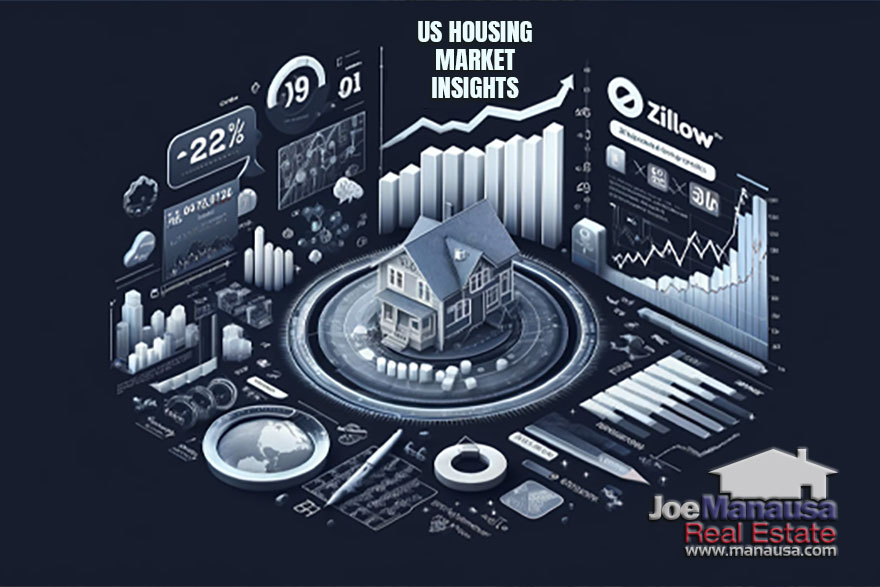
 Welcome to our special report on the U.S. housing market, featuring exclusive insights and six crucial Zillow graphs.
Today, we’re breaking down the latest trends and data to give you a clear picture of home sales, pricing dynamics, and market forecasts. With comprehensive analysis backed by Zillow’s trusted data, we’ll uncover what’s driving changes in the housing landscape.
Whether buying, selling, or staying informed, you won’t want to miss these essential findings. Stay tuned as we delve into each segment, equipped with key visuals that clarify these complex market movements.
Fewer Buyers – 28-Month Trend Continues
Have you noticed the recent downturn in U.S. home sales? It’s not just about rising interest rates.

Here’s an intriguing fact: the decline in U.S. home sales began in December 2021, a time when buyers were securing loans with mortgage rates well below 3%.
This marked the beginning of a 28-month trend of decreasing home sales year-over-year, which started well before rates began to climb. So, what’s really behind this slowdown?
The root cause of this downturn is the severe shortage of available homes. This scarcity has led to a situation where fewer houses are on the market, and the ones that are available become the center of intense bidding wars. Buyers are often left out despite their best offers, leading to escalating prices and significant buyer fatigue. This relentless competition has led many potential buyers to step back from the market.
We need more homes to draw buyers back into the market.



Housing Crash or Boom? Here’s What’s Coming in 2025
BIGGEST Housing Market Myth EXPOSED by New Foreclosure Data
Zillow: “We Need More Homes”
In the ever-changing landscape of the U.S. housing market, one fact remains starkly clear: we need to build more homes.

Today, Zillow reports that just over 913,000 homes are available in the US. This might seem like a lot, but the shortfall is alarming compared to the over 4 million homes available twelve years ago. Despite a 10% increase in inventory compared to last year, it’s simply not enough to keep up with the pace of population growth and household formations in our country.
Why is this happening? It boils down to the fact that we aren’t producing homes fast enough. This graph vividly illustrates the decline in home availability over the last five years, underscoring a crucial need for action.
If you’re a millennial, this issue hits home as home affordability is plummeting. Understanding these trends is not just important, it’s crucial for your future housing opportunities.
Keep Up With New Trends In Tallahassee!
Get The Tallahassee Real Estate Newsletter
 Don't be the one that doesn't know what's going on when you sell a home or buy a home in Tallahassee.
Other buyers, sellers, lenders, and real estate agents have this critical information, and now you can too!
Get immediate access to our most recent newsletter.
Let more than 30 years of experience work for you with charts, graphs, and analysis of the Tallahassee housing market.
Home Prices Are Rising Again
If you’re stepping into the housing market for the first time, understanding the current trends in home prices is crucial.
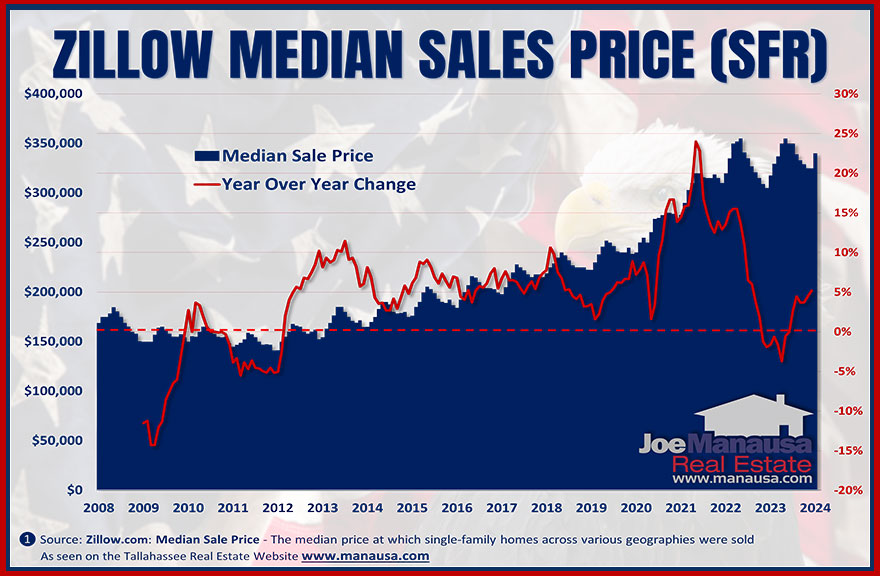
Recent data from Zillow shows that home prices have stabilized over the past two years, with the usual seasonal ups and downs. This year, however, we’re seeing a significant trend: home prices are rising again.
Zillow reports a 5% increase in the median sales price compared to last year. While this might raise some concerns for first-time homebuyers, it also presents an opportunity. This increase indicates an under-supplied housing market, and the graph not only helps us understand the normal fluctuations but also points to a steady climb in home values.
If you’re planning to buy your first home, now might be the time to start looking before prices climb higher.

Fannie Mae Report: It's The TRUTH About The Housing Market
Real Estate Meltdown: Starter Homes at $1M in 233 Cities

Is the Housing Market Crashing? | Redfin April 2025 Update

Is This The CALM Before The CRASH? Volatility Rocks Housing
Warning Signs For Home Buyers And Sellers
Majority Of Local Markets Strong
Looking to buy a home in 2024? Zillow’s latest market outlook offers some promising news.

Nearly four out of every five local housing markets in the U.S. are projected to see price growth next year. That’s right, 78% of all U.S. housing markets are expected to experience gains.
Zillow predicts an overall growth rate of 1.4% for U.S. houses, indicating a steady rise in home values across the board. This growth isn’t just limited to a few hotspots; it’s widespread, affecting 695 local markets nationwide.
Whether you’re a first-time buyer or looking to invest, understanding these trends is crucial for making informed decisions. Remember, buying a house is not just about finding the perfect place to call home—it’s also a significant investment.

The Best Time To Lower The Price In A Home Sale
Want to Sell Your Home Quickly and Profitably? Watch This Now
Time-Lapse Tree Removal!
What Does A Realtor Earn?
How To Sell Your House When You Are In A Hurry

Do's And Don'ts During The Home Loan Process

7 Tips On Buying A Home With A Pool
How much house can you actually afford (By Income)?

What Sellers Need To Know About Robo-Offers In Real Estate
Zillow: Home Price History Forecasts Future Growth
Despite consistent headlines declaring a looming collapse of home prices, actual data tells a different story about the US housing market.

Home prices are on the rise again. In fact, since 1996, Zillow has tracked the change in home values, averaging an annual growth rate of 4.7%. Even with the declines from the Great Recession, the average rate of growth is nearly 5%.
So, what’s driving this growth today?
The key driver of this growth is the fundamental principle of supply and demand. Currently, the market is experiencing a scarcity of homes for sale, a situation that naturally leads to price increases. Builders have been scaling back production for the past 15 years, resulting in a shortage of inventory that has significantly boosted home prices.
For those thinking of buying or selling, these numbers are more than just statistics; they clearly indicate market trends. Understanding these dynamics can help you make informed decisions in a competitive market.

How To Sell Your House On Your Own

10 PROVEN Strategies To Increase A Home's Selling Profit
2025s HOTTEST Home Selling Strategies You Need NOW
The 3-DAY Method To Sell Your Home For More (2025)
The Best Time To Lower The Price In A Home Sale

How FOMO Makes Your Home Sale More Profitable

Home Sale Sabotage: Top 10 Mistakes Sellers Make
Rising Rents: A Home Affordability Crisis
Rental rates are skyrocketing, and it’s hitting millennials hard.
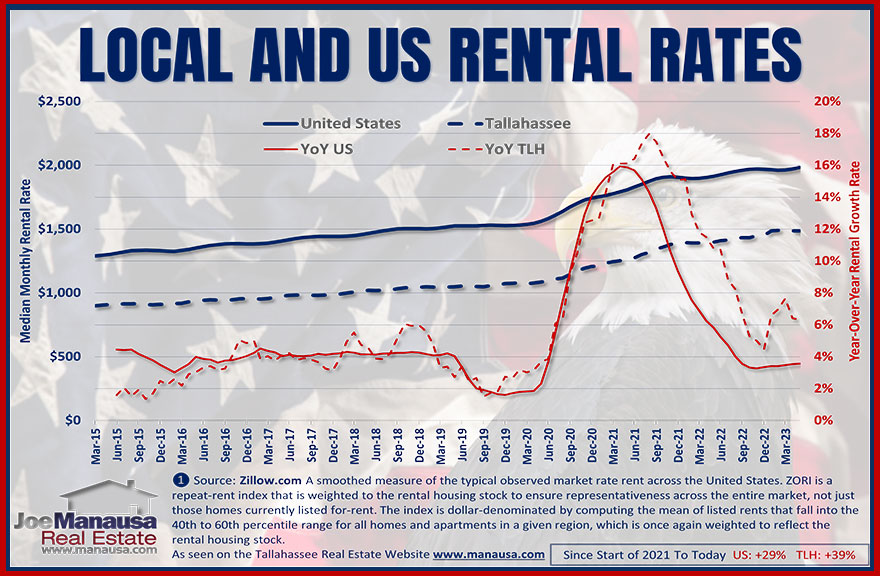
Amidst advice suggesting “not to buy a home right now,” the reality remains: you have to live somewhere. This squeeze means fewer affordable options for many, forcing tough decisions in an already strained housing market.
Since 2020, rental rates across the US have surged by thirty-one percent. That’s nearly seven percent per year. But in Tallahassee, the spike is even more pronounced with an increase of forty-three percent, close to nine percent annually.
This rapid climb in rental rates is outpacing core inflation, making housing affordability a pressing issue. Whether you’re looking to rent or buy, the financial strain is becoming increasingly difficult to manage, especially for millennials.
As prices push higher, many find themselves priced out of both markets. It’s essential to stay informed and explore all your options.
Buy Now Or Wait? The 91.6% Rule
Biased Results? The New York Times Rent Or Buy Calculator
Do's And Don'ts During The Home Loan Process

6 Real Estate Contract Terms You Should Not Overlook
7 Tips On Buying A Home With A Pool
How much house can you actually afford (By Income)?

What Does "Marry The House Date The Rate" Mean In Real Estate?

Why Fixer Uppers Are the New Gold | Home Renovation Guide

8 Tips For Buying An Affordable Florida Vacation Home

Customer Testimonial After Working With JMRE

What People Are Saying About Joe Manausa Real Estate

Gary Levox Recommends Joe Manausa

He's Not Your Average Joe
Preston Scott On Selling A Home During The Holidays

Are you looking for the best real estate agent in Tallahassee?