
Family #1: The Trapped Upgraders
Picture the Johnsons’ home: toys scattered across the living room floor, a makeshift office crammed in the corner of the bedroom, and a kitchen that’s bursting at the seams during family dinners. This is the reality for many families who bought their first homes back in 2020, like the Johnsons with their FHA mortgage at a sweet 2.25% rate.

Fast forward to today, they’ve had another child and they’re dreaming of more space. A proper home office, an extra bedroom for the kids, a kitchen where they can actually move around. Sounds great, right? But here’s where things get complicated.
Home prices have gone through the roof since 2020. Imagine if your grocery bill suddenly jumped nearly 40% overnight – that’s what’s happened to home prices. In April 2020, the median price for an existing home was $317K. Now? It’s skyrocketed to $436K. That’s a massive leap in just four years.
For the Johnsons, this means their dream home – about 50% bigger than their current place – comes with a jaw-dropping price tag of around $640K. But that’s not even the worst part. Remember their manageable mortgage payment? Well, for this new home, it would nearly triple. Yes, you heard that right.
Why such a crazy increase? It’s not just the higher home price. Interest rates have shot up too. That 2.25% rate they locked in? Ancient history. Now they’re looking at rates around 6.5%. That difference might seem small, but it adds up fast.
And we’re not done yet. The typical single-family home now costs about $436K. That’s just the purchase price – don’t forget about property taxes, insurance, and maintenance.
So the Johnsons are stuck. Stay in their cramped home or stretch their budget to the breaking point? It’s a tough choice, and they’re not alone. Many families are in the same boat, especially with the serious shortage of modestly priced homes on the market. We’re talking about a shortfall of as many as 18 million homes. This shortage means families like the Johnsons can’t find that middle ground – a slightly bigger home that doesn’t break the bank. Many homeowners feel trapped in their starter homes because of this real estate catch-22, yet they still fare better than our second family’s predicament.
Keep Up With New Trends In Tallahassee!
Get The Tallahassee Real Estate Newsletter
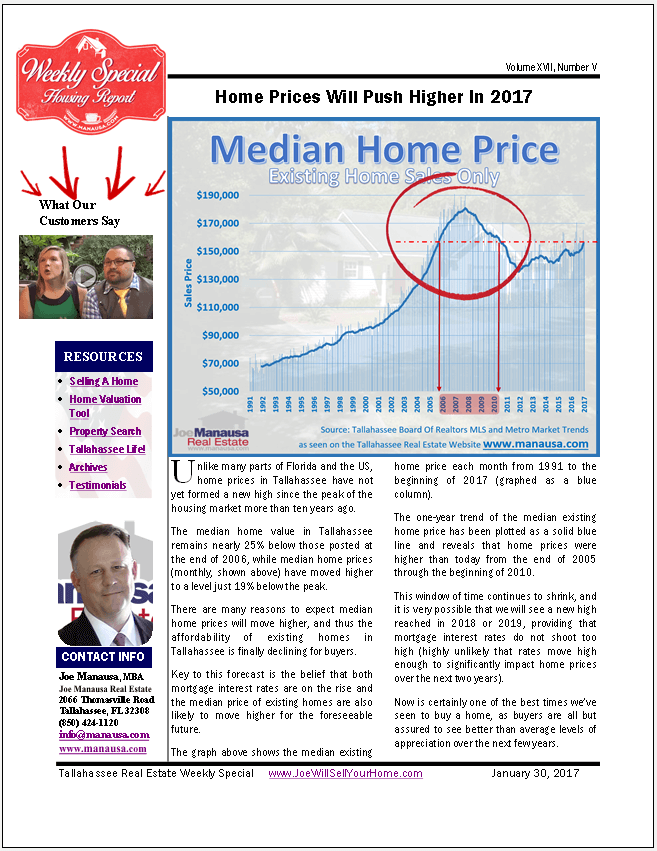 Don't be the one that doesn't know what's going on when you sell a home or buy a home in Tallahassee.
Other buyers, sellers, lenders, and real estate agents have this critical information, and now you can too!
Get immediate access to our most recent newsletter.
Let more than 30 years of experience work for you with charts, graphs, and analysis of the Tallahassee housing market.
Family #2: The Regretful Waiters
Ever wondered how much waiting could cost you in the housing market? Let’s take a look at the Smiths’ eye-opening experience.
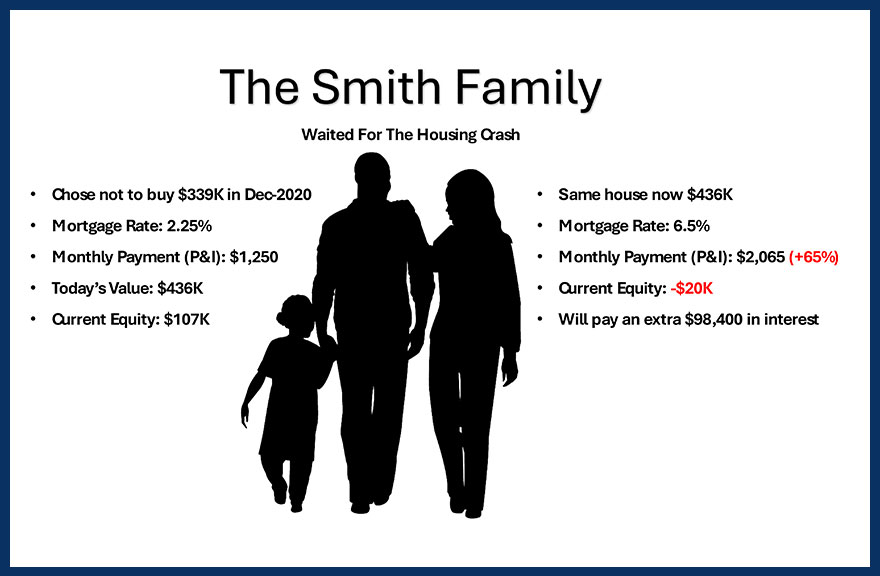
Back in December of 2020, the Smiths could’ve bought a $339K home with a 2.25% interest rate, paying just $1,250 monthly. Unfortunately, they took the advice from YouTube channels calling for a crash of the housing market. They didn’t study supply and demand, they just let the clickbait channels leave them out of the market. They decided to wait, hoping for prices to crash. Big mistake.
Fast forward to today, and that same house now costs $436K with interest rates at 6.50%. Their potential monthly payment? A whopping $2,065, 65% higher than if they had purchased when they wanted to move. It’s like watching a train leave the station as you’re running to catch it – the Smiths are now priced out of a market they once could’ve easily afforded.
Over a 30-year loan, this waiting game will cost them an extra $98,400 in interest payments. That’s money that could’ve gone towards vacations, college funds, or retirement savings.
The Smiths aren’t alone. The National Association of Realtors reports first-time homebuyers hitting record lows. Rising prices and interest rates have pushed many potential buyers out of the market. And saving for a bigger down payment? That’s another challenge. Bankrate’s 2024 Down Payment Survey shows over half of aspiring homeowners can’t afford the cash needed for down payments and closing costs.
So why didn’t housing prices crash as the clickbait channels predicted? Limited supply kept prices high, even as interest rates climbed. New construction hasn’t kept up with demand, and many homeowners are reluctant to sell and give up their low interest rates. Long-time viewers might remember a video I released three years ago saying that at that time it was going to be the best time for the rest of their life to buy a home and rates were historically low and the supply of homes was far below what was needed.
The Smiths’ story teaches us a few things. First, timing the market is risky – home prices have only fallen in 7 of the past 80 years. Second, long-term thinking is crucial in big financial decisions. Your home’s equity growth over time can significantly impact your future plans.
As we look at the next family’s story, ask yourself: In a market that’s constantly changing, what’s the real cost of waiting for the “perfect” moment?
Buy Now Or Wait? The 91.6% Rule
Biased Results? The New York Times Rent Or Buy Calculator

Do's And Don'ts During The Home Loan Process

6 Real Estate Contract Terms You Should Not Overlook

7 Tips On Buying A Home With A Pool
How much house can you actually afford (By Income)?

What Does "Marry The House Date The Rate" Mean In Real Estate?

Why Fixer Uppers Are the New Gold | Home Renovation Guide

8 Tips For Buying An Affordable Florida Vacation Home
Family #3: The Costly Downsizers
Imagine downsizing your home only to end up paying more. Sounds crazy, right?

Well, that’s the reality for families like the Wilsons, who refinanced their home at a rock-bottom 2.25% interest rate in December 2020. It’s like trying to save money by buying a smaller car, only to find out the gas costs twice as much.
Here’s the deal: The Wilsons want to move to a home that’s 25% cheaper than their current $400,000 house. But with today’s interest rates at 6.5%, their monthly payment for a $327K home would jump from $1,249 to $1,461. That’s a 17% increase for less space!
This isn’t just a Wilson family problem. About 70% of homeowners with mortgages are locked into rates below 5%. That’s millions of families stuck between staying in homes that might be too big or facing higher payments for smaller places. It’s practically stopped the housing market in its tracks.
Nearly half of all homeowners would pay more if they moved, even to less expensive homes. This isn’t just about personal finances – it’s reshaping the entire housing market. With fewer people willing to sell, we’re seeing a serious shortage of available homes. This makes it tough for first-time buyers and can slow down the whole economy.
So what can families like the Wilsons do? Some options include renting out extra space in their current home, exploring adjustable-rate mortgages for a new purchase, or considering a cash-out refinance to fund home improvements.
If you locked in a low rate during the pandemic, think carefully before moving. The financial impact might be bigger than you expect. And if you’re looking to buy, be ready for limited options and potentially higher costs than you might think. The housing market’s got some serious challenges right now, and we’re all feeling the squeeze.





Housing Crash or Boom? Here’s What’s Coming in 2025
BIGGEST Housing Market Myth EXPOSED by New Foreclosure Data



How To Sell Your House On Your Own

10 PROVEN Strategies To Increase A Home's Selling Profit
2025s HOTTEST Home Selling Strategies You Need NOW
The 3-DAY Method To Sell Your Home For More (2025)

The Best Time To Lower The Price In A Home Sale

How FOMO Makes Your Home Sale More Profitable